TO UNDERSTAND THE PRESENT, LOOK FAR BACK.
THE WORLD,WOVEN
Today’s world is complex. Keeping up can feel impossible.
Wars, borders, crises, economies, technology. Every day, the news brings us events that change fast. Without context, it is hard to understand what is really happening.
This work gives you the foundations to understand the world. Truly.
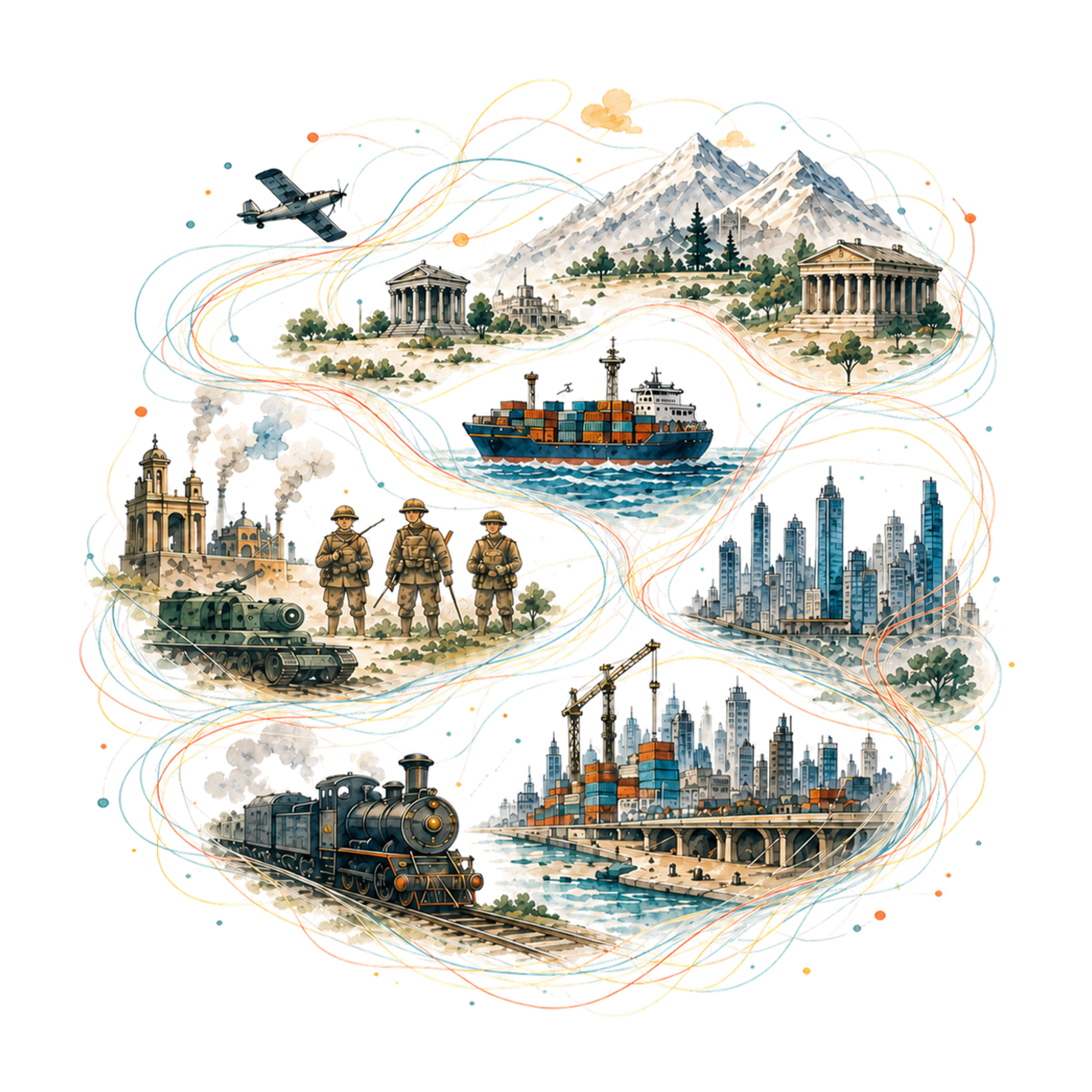
A story that joins the dots
You do not need to know everything.You need to understand the connections.
This is not a history lesson. It is a story that joins the dots. Across thousands of years, you will discover why the world works as it does—and why some news stories are never “just” news. By the end, you will see the present differently.
Understand the present
Every event today has deep roots. You will learn to see them.
Make sense of the news
From television to social media, you will distinguish what truly matters.
Make better decisions
Knowing the world helps you understand where we are heading.
Grow as a person
The more you understand the world, the more you understand yourself and your choices.


Start with a question
The world makes sense when you see the connections.
This isn’t a list of facts. It’s a story about how the world became the way it is — and why it matters today.
The full story
Six parts. One world.
Follow the thread from the physical Earth to the invisible systems shaping tomorrow.
 I
IThe Earth Decides More Than You Think
How terrain, water, climate and location shape possibilities without determining human choices.
4 chapters II
IIHow We Ended Up Here
How surplus, cities, institutions, identity and administration allow larger communities to organize power.
5 chapters III
IIIHow We Connected the World
How land and sea routes turn distant regions into networks of goods, ideas, beliefs, disease and dependency.
5 chapters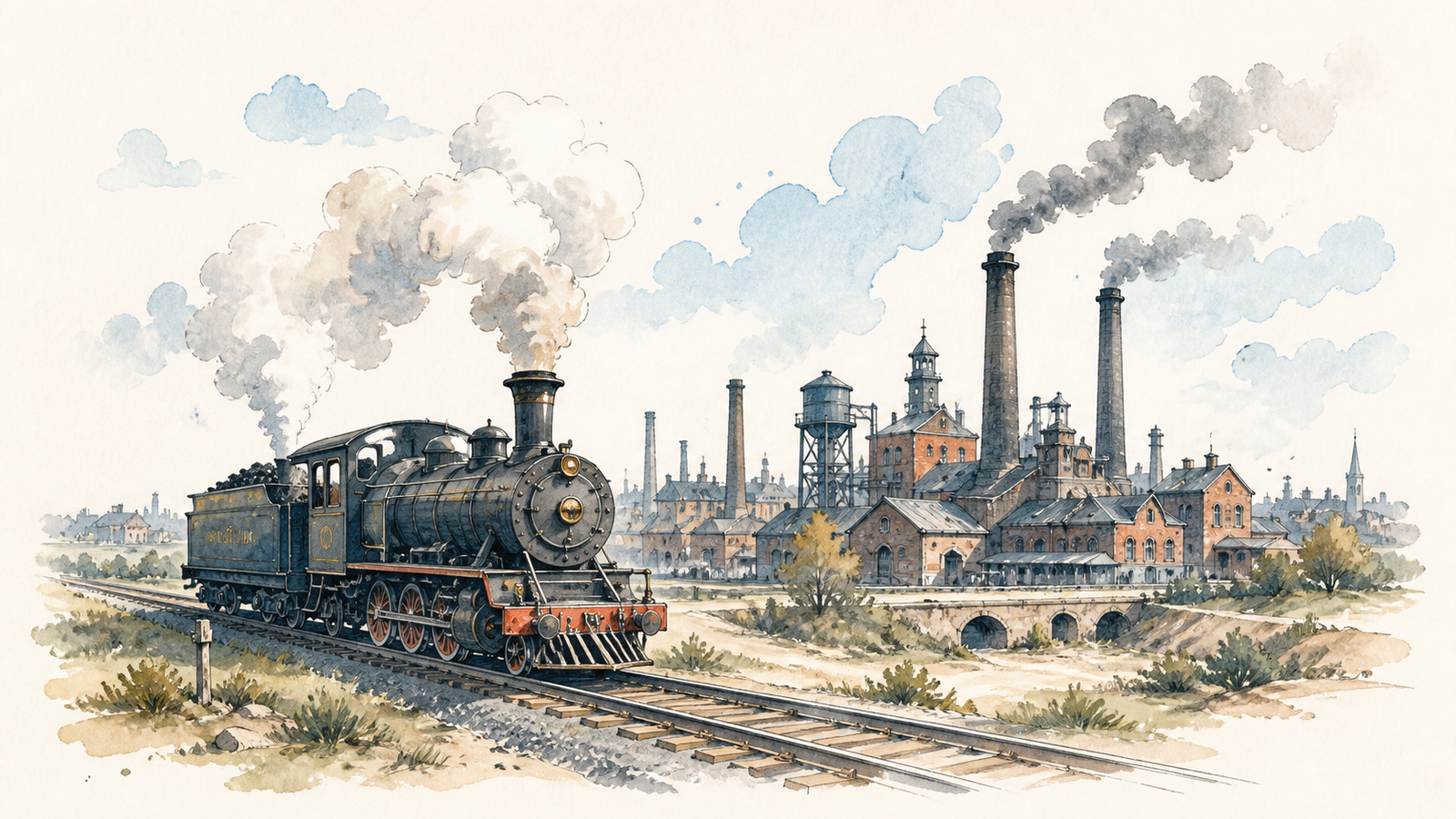 IV
IVWhen Technology Changed the Rules
How energy, industry, transport, communication and demography transform the possible scale of power.
5 chapters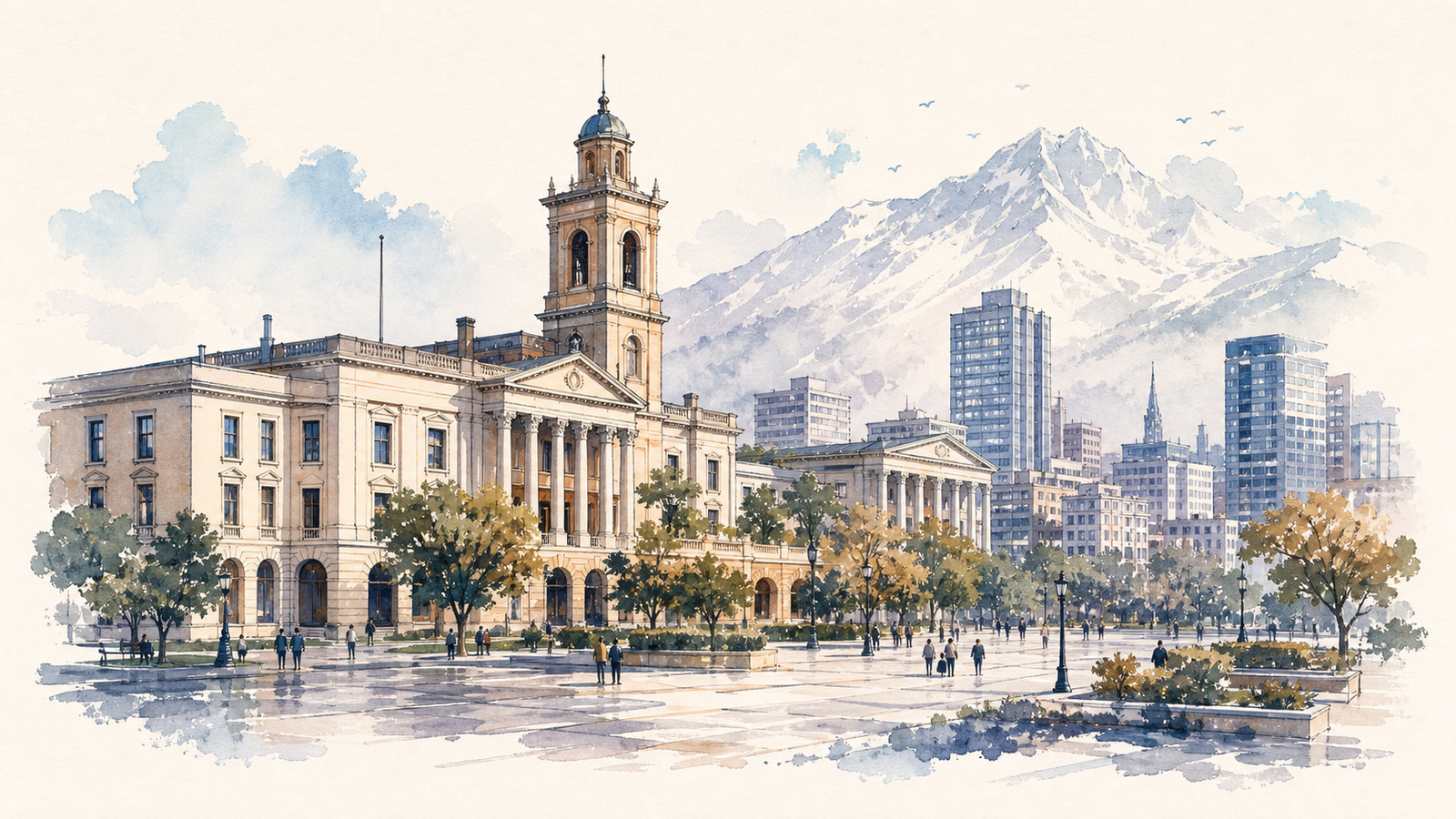 V
VWhy the World Looks Like This
How imperialism, world wars, institutions, the Cold War and decolonization produced much of today’s map.
6 chapters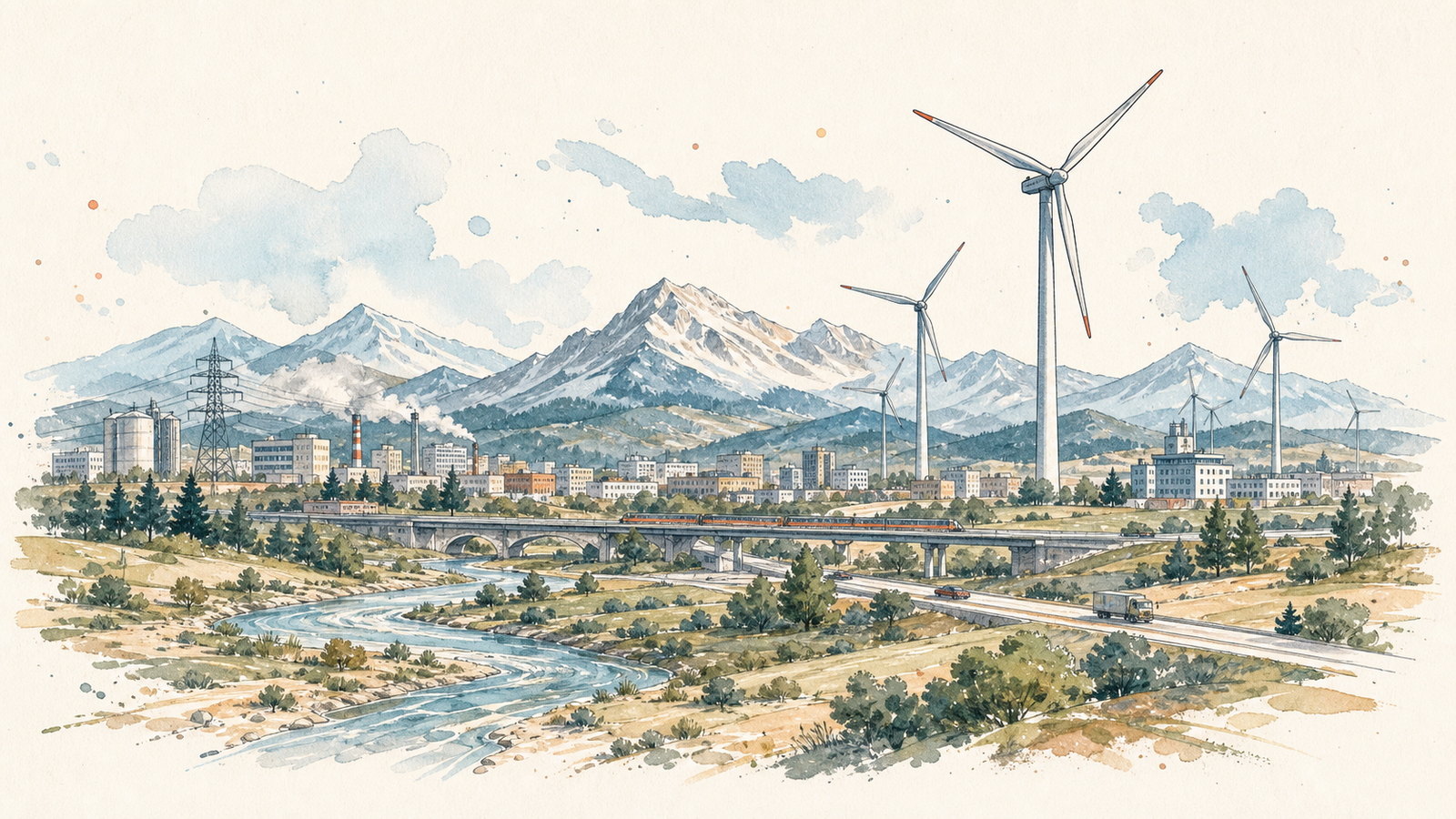 VI
VIThe Geography You Can't See
How powers, supply chains, chips, energy and invisible infrastructure make the present a product of the past.
5 chapters
Complete contentsView all 30 chapters
The Earth Decides More Than You Think
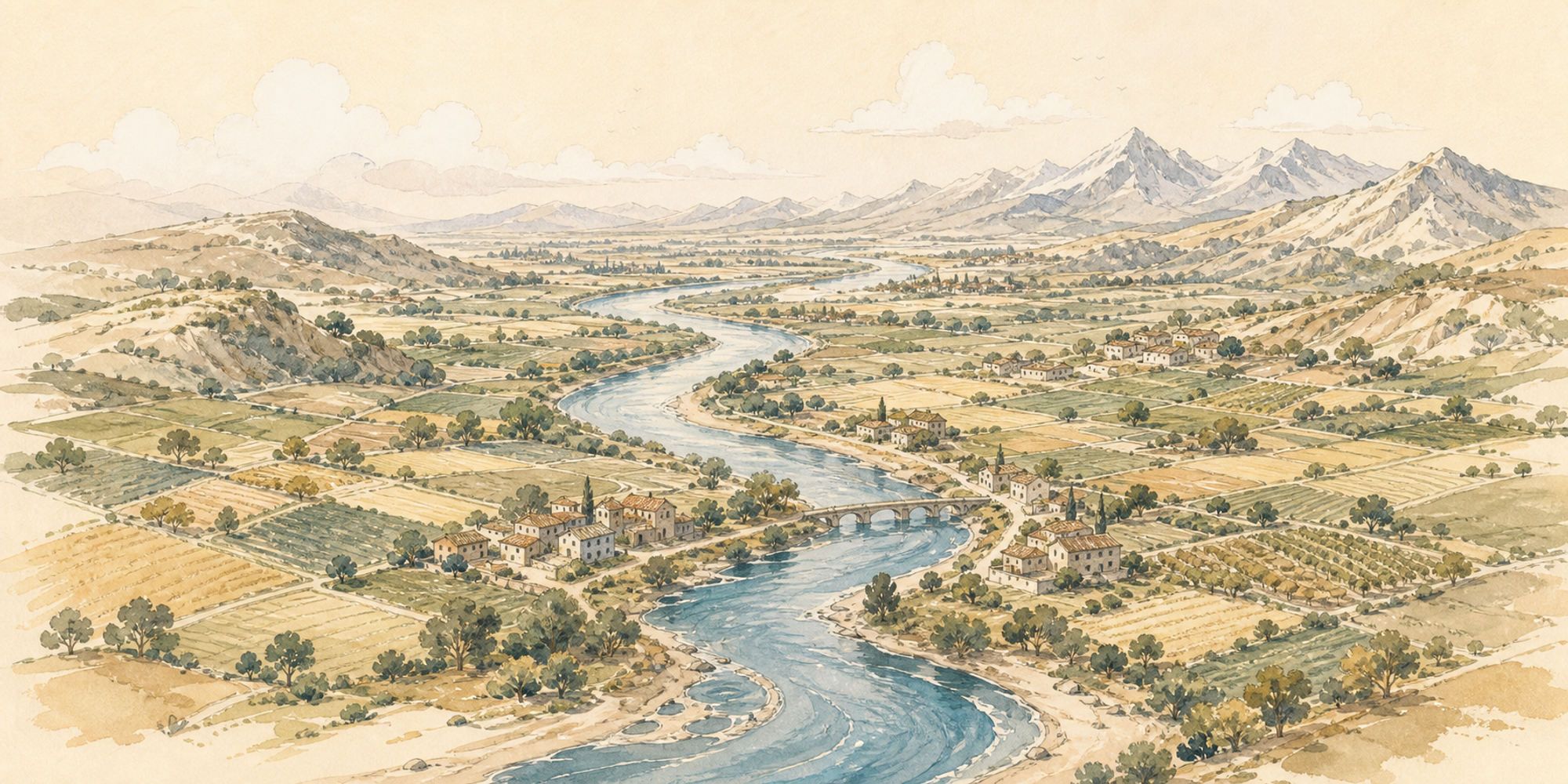 01Why Do We Live Here?Before states and borders, there were rivers, plains, mountains, deserts and coastlines. Why did large human populations grow in some places rather than others, and how does geography create opportunities and costs without deciding our fate?
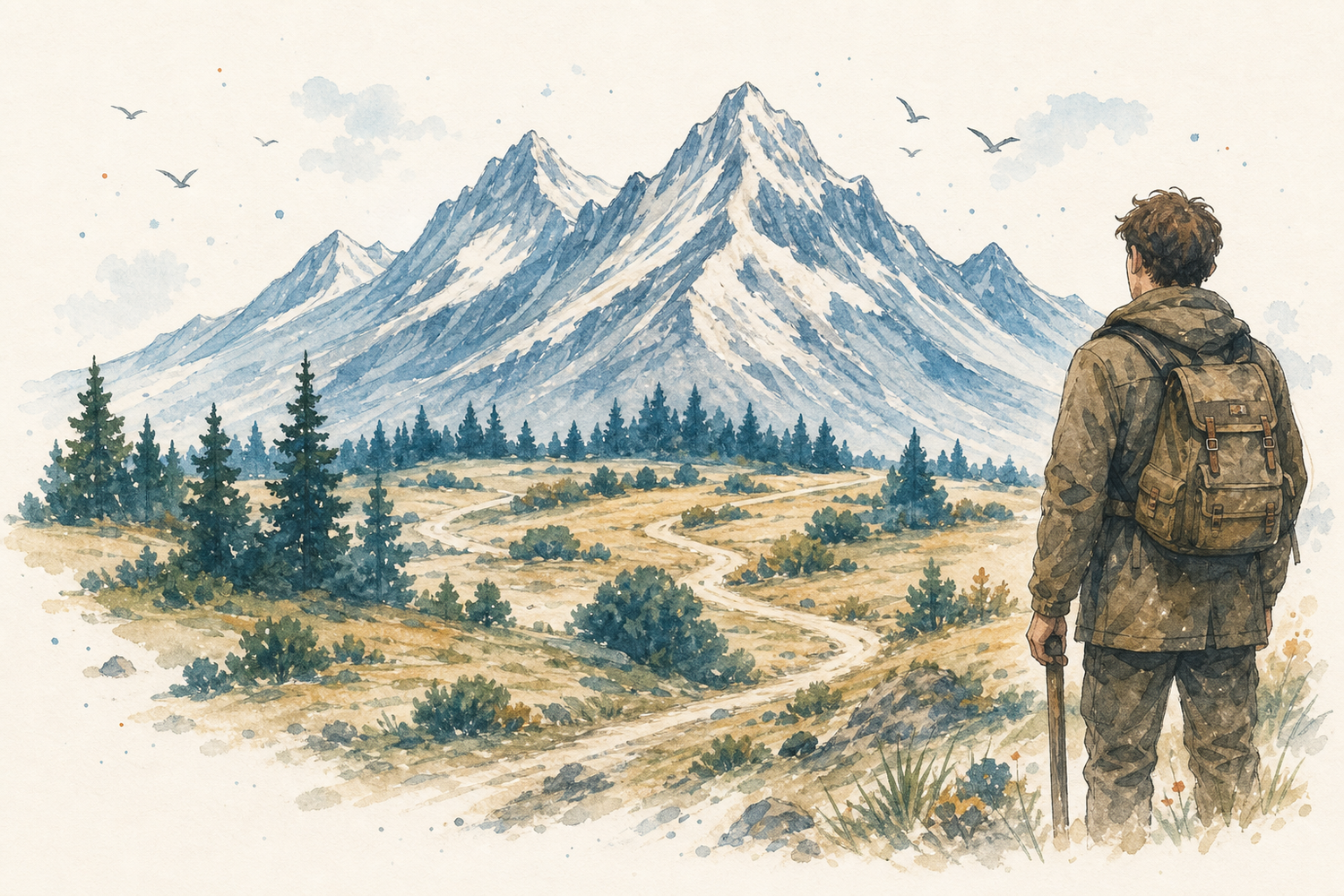
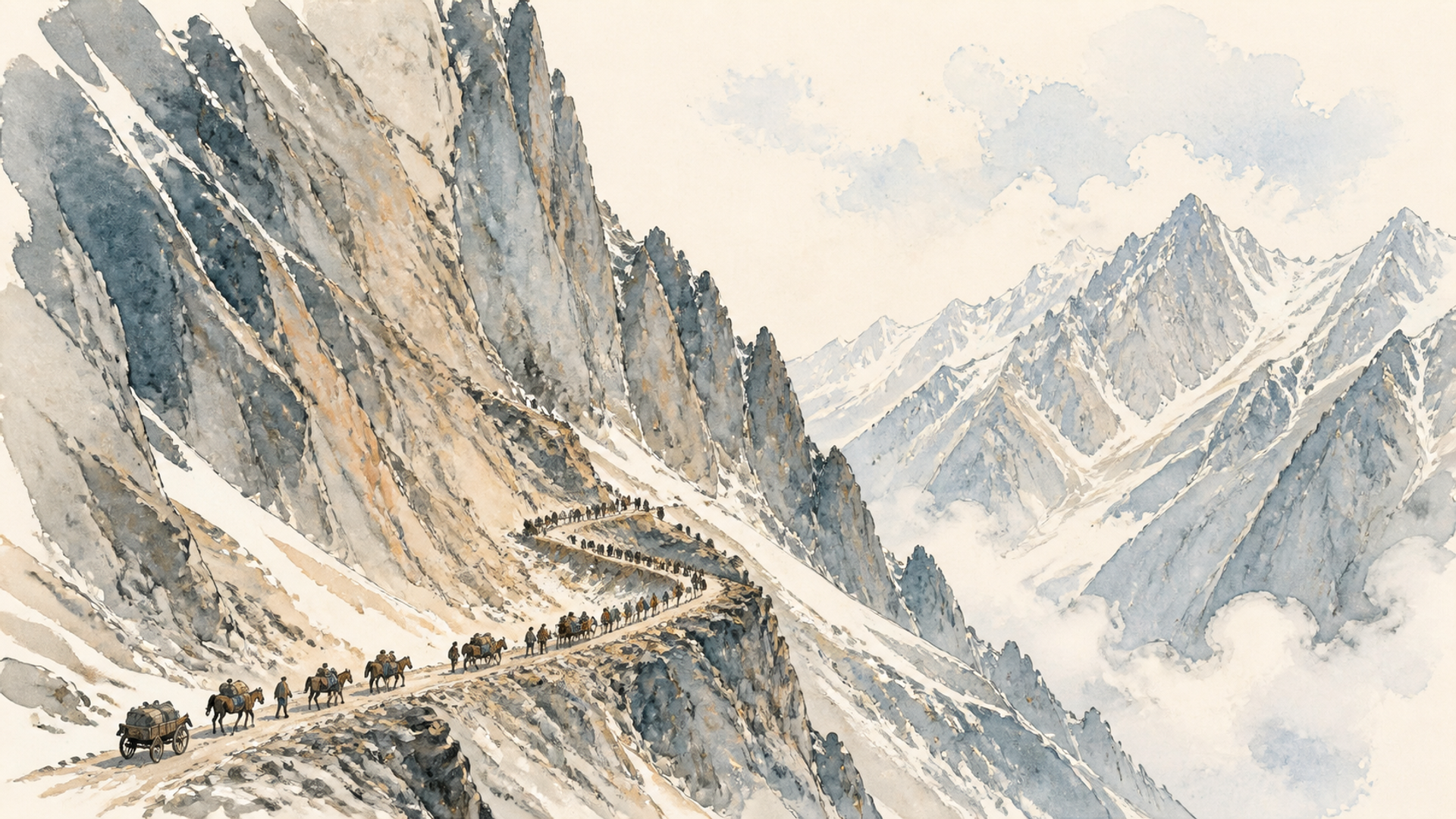 02Can a Mountain Win a War?Mountains, rivers, forests, deserts and plains can shelter, slow or channel armies and trade. This is our first encounter with logistics, strategic depth and the cost of distance.
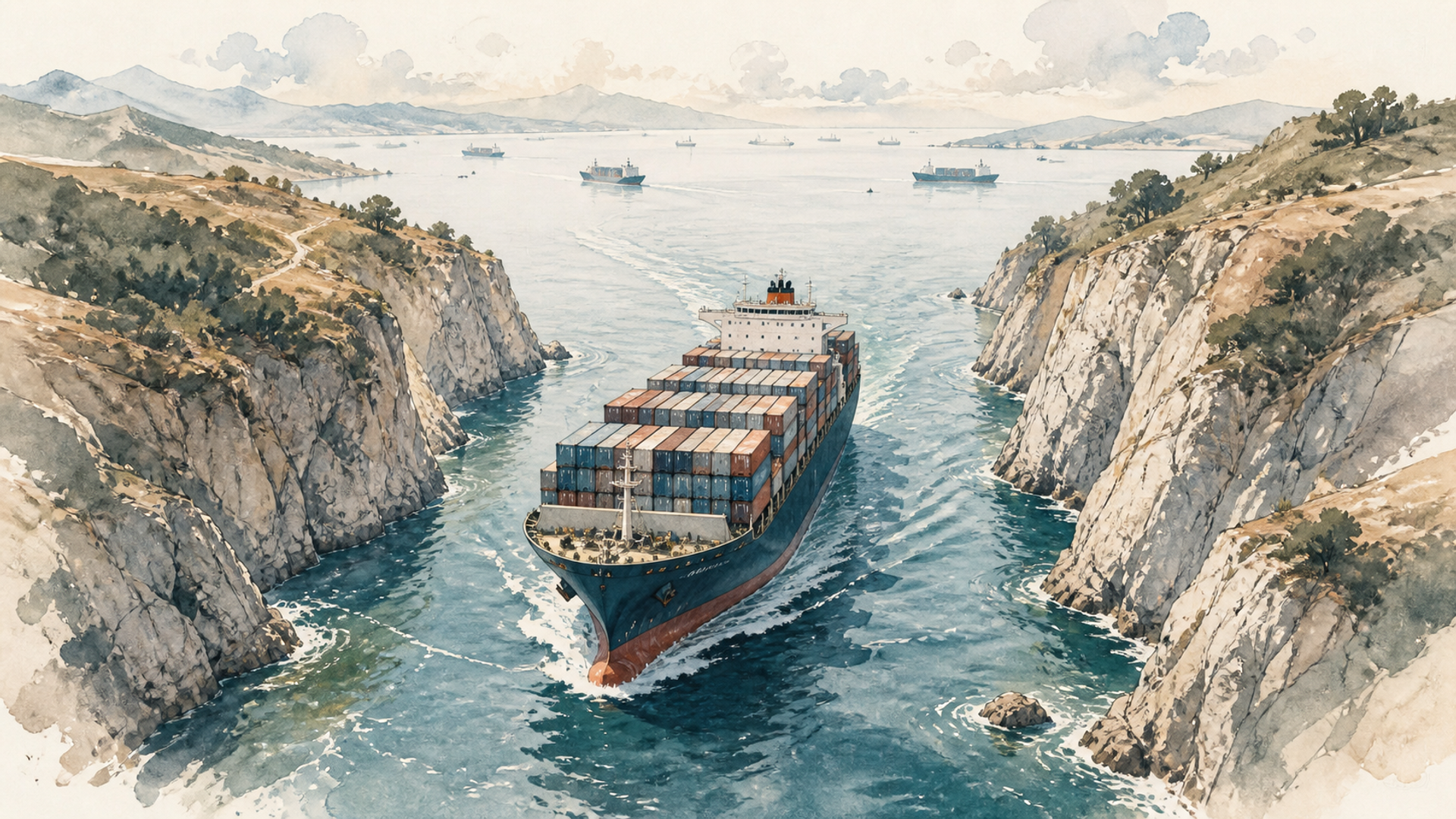 03When a Place Is Worth More Than What It ContainsA territory may matter not for what it possesses, but because everyone has to pass nearby. Gibraltar, the Bosporus, Hormuz, Malacca and Suez reveal the power of nodes and chokepoints.
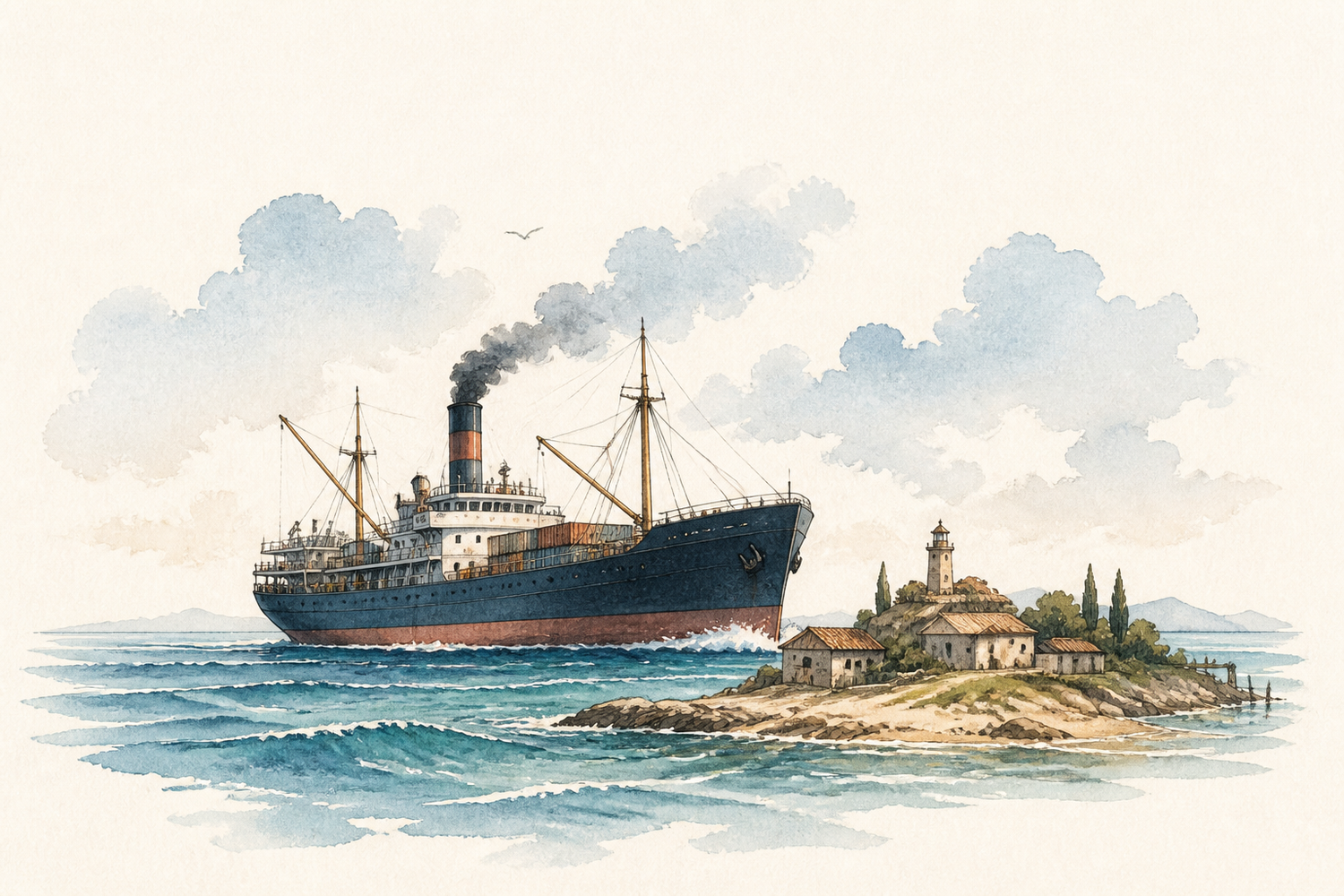
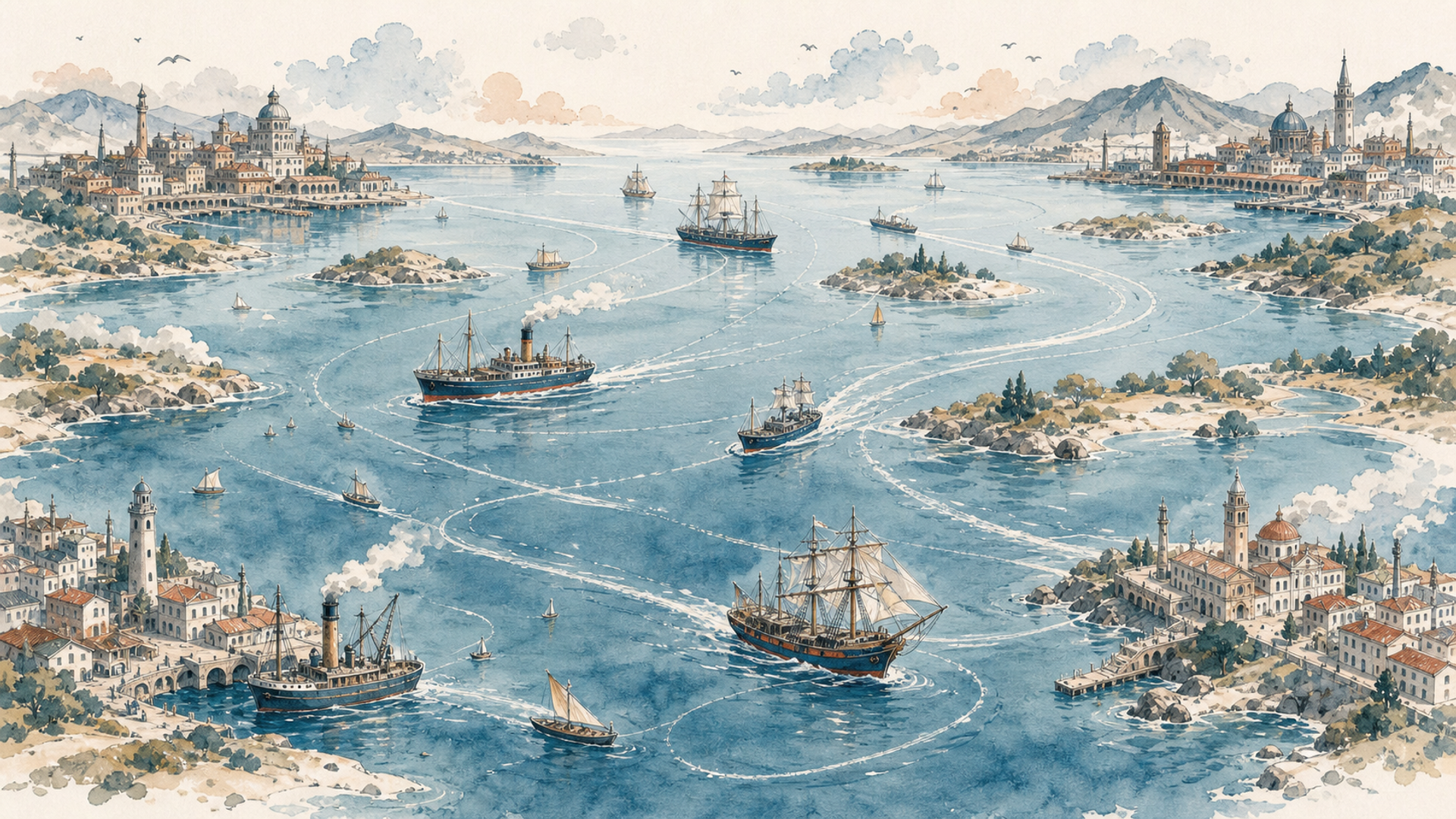 04Does the Sea Divide or Connect?The sea seems to separate people, but navigation turns it into the most efficient route for moving large quantities of goods. Ports, fleets and shipping lanes change the value of geography.
How We Ended Up Here
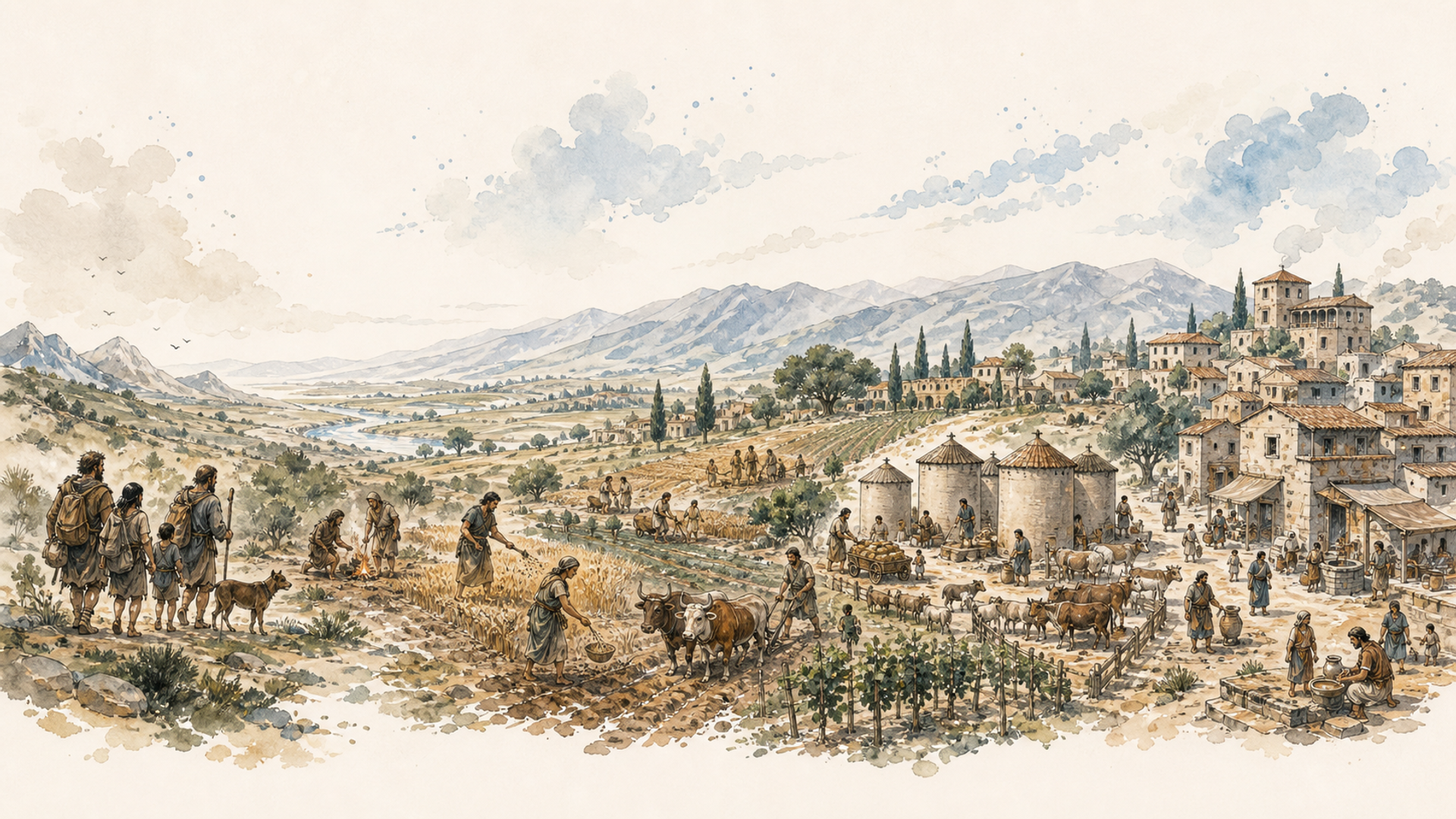 05Why Did We Stop Chasing Food?Agriculture was not simply progress: it bound communities to land, created surpluses, property and new vulnerabilities. It supplied the material foundation for cities, specialists, taxes and states.
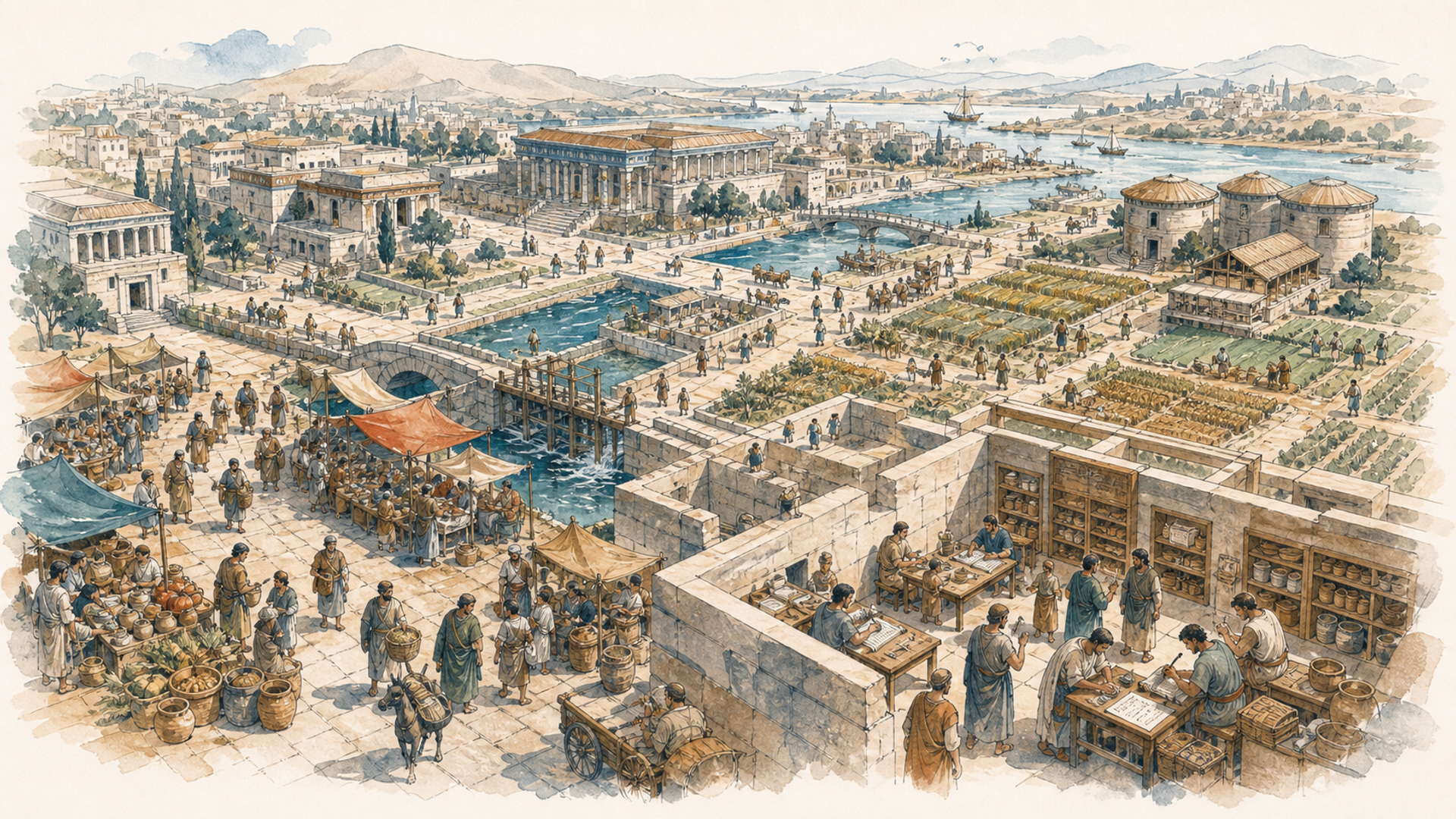 06How Do You Govern a City?As a community grows, personal memory is no longer enough. Writing, accounting, archives, granaries and administration become technologies of power.
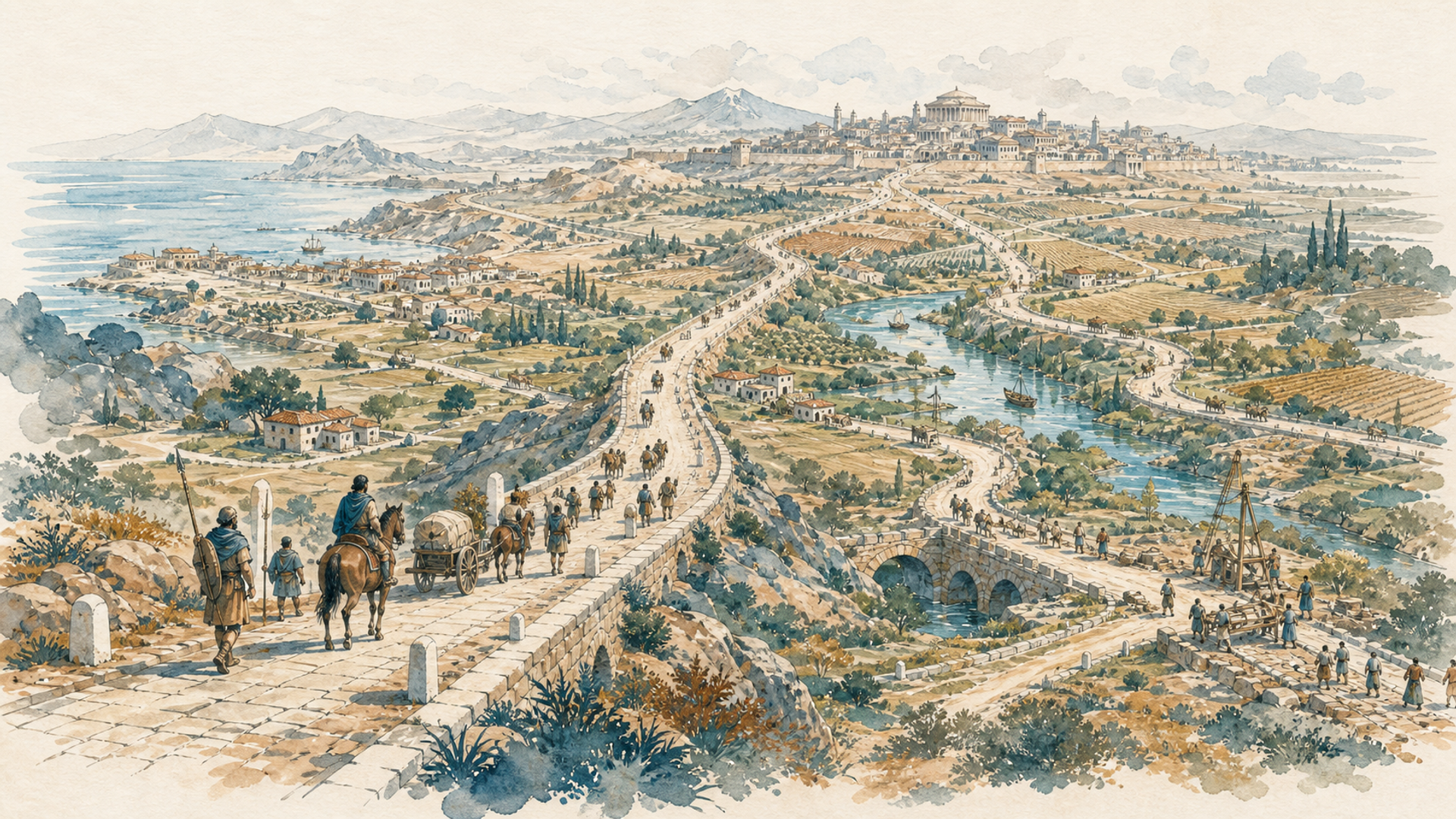 07Why Do Empires Arise?Persia, Rome and imperial China show why conquest can increase resources and security—and why every new conquest makes a system harder and more expensive to control.
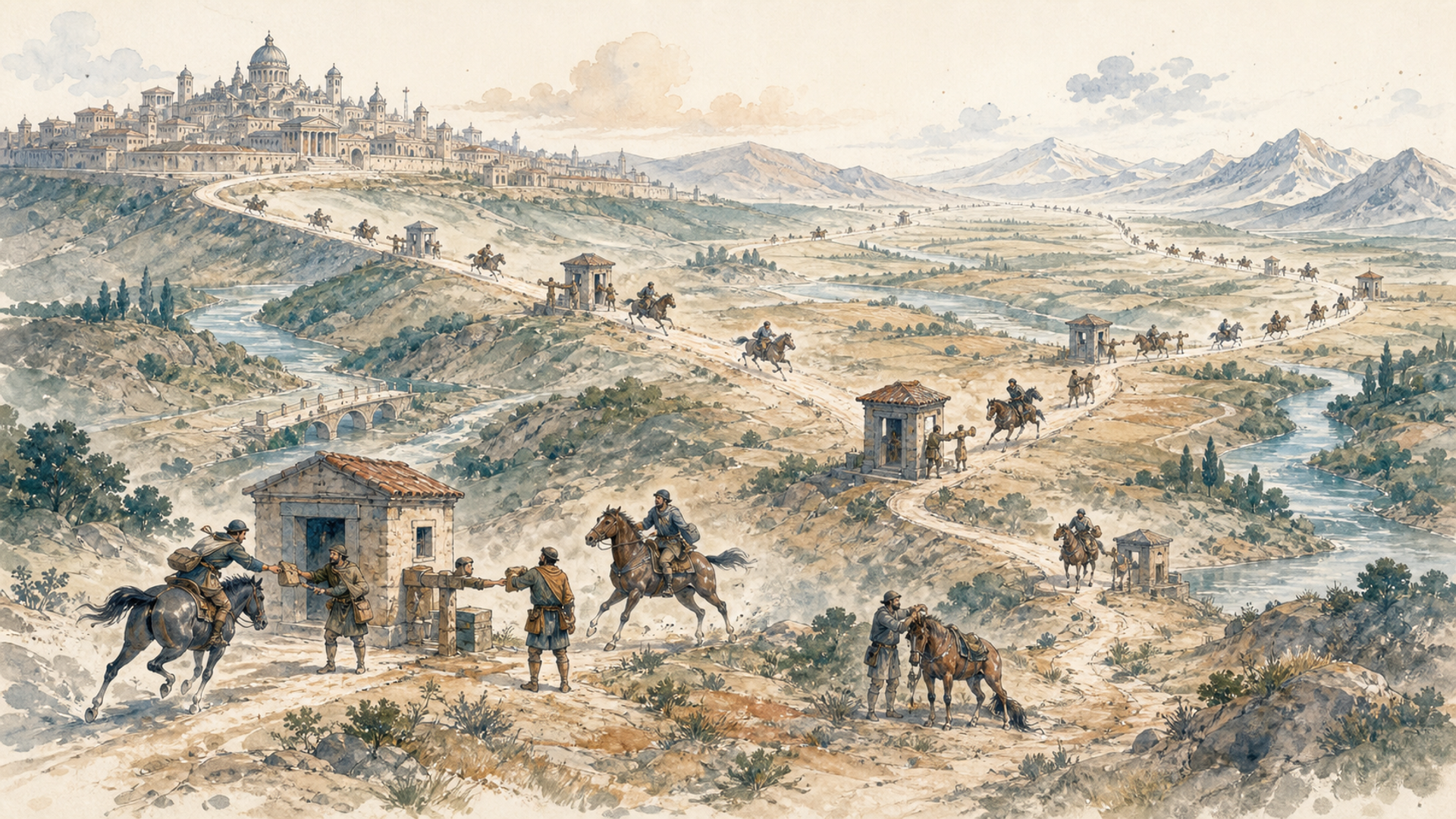 08How Far Can You Really Command?Conquest is not government. Roads, messengers, horses and administrative networks show how the speed of information helps determine the possible scale of a state.
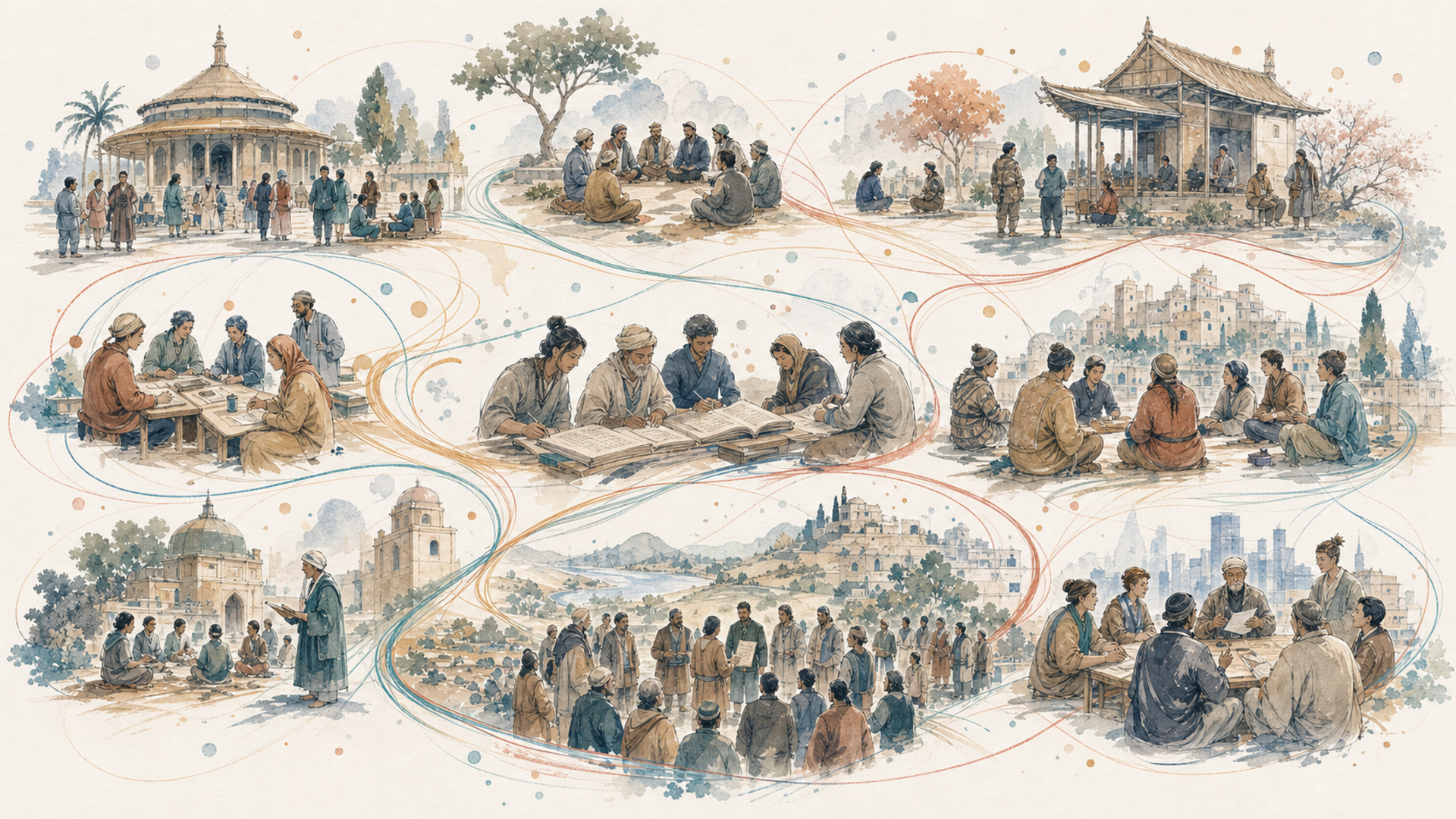 09Why Do Millions of Strangers Feel Part of the Same World?Empires are not held together by armies and taxes alone. Beliefs, rules, languages and identities allow people who will never meet to imagine themselves as part of the same order.
How We Connected the World
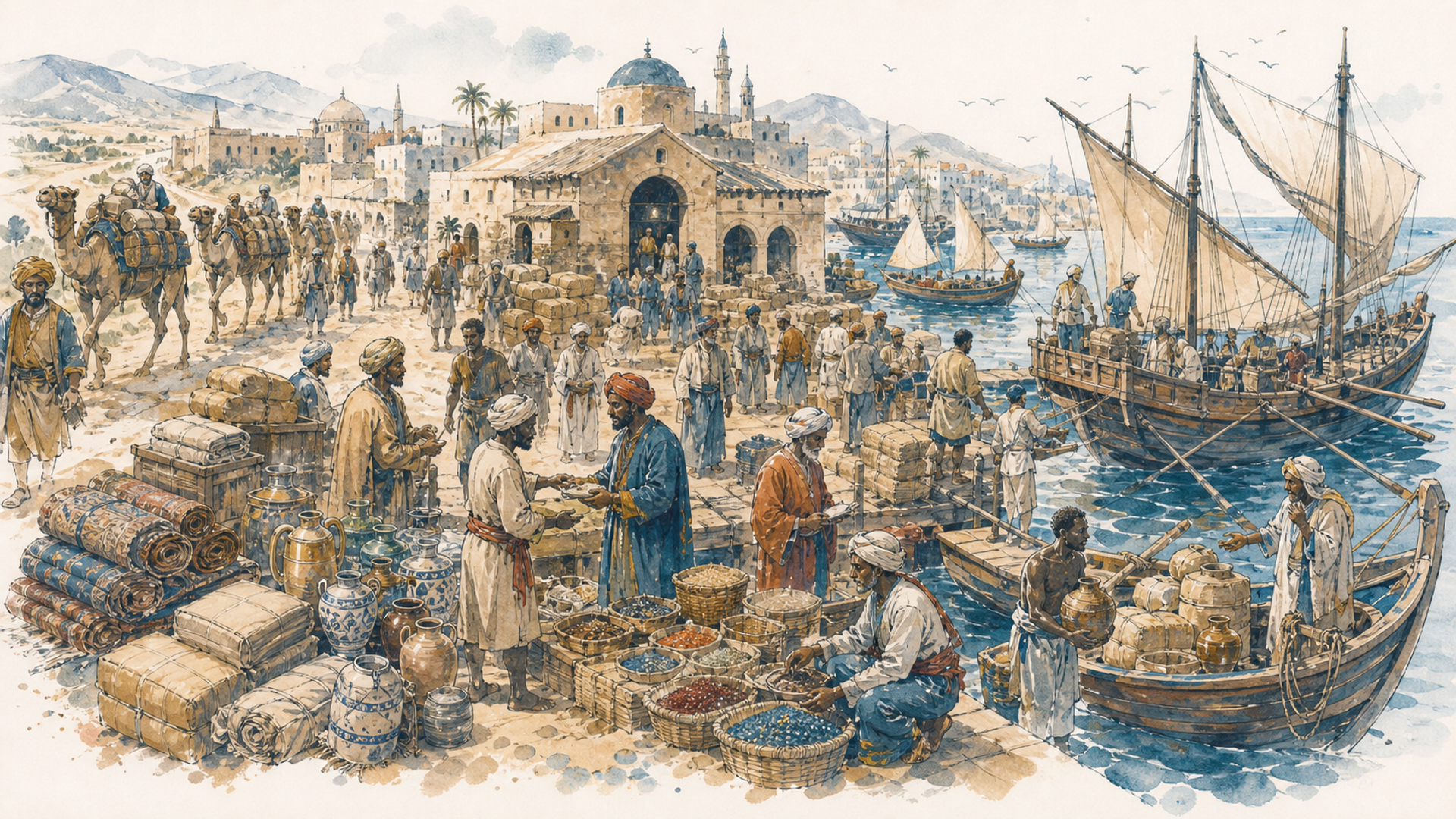 10Who Invented Globalisation?Long before multinational companies, Eurasia and Africa were already connected by networks of merchants, ports and cities. Goods, religions, technologies and diseases travelled from node to node.
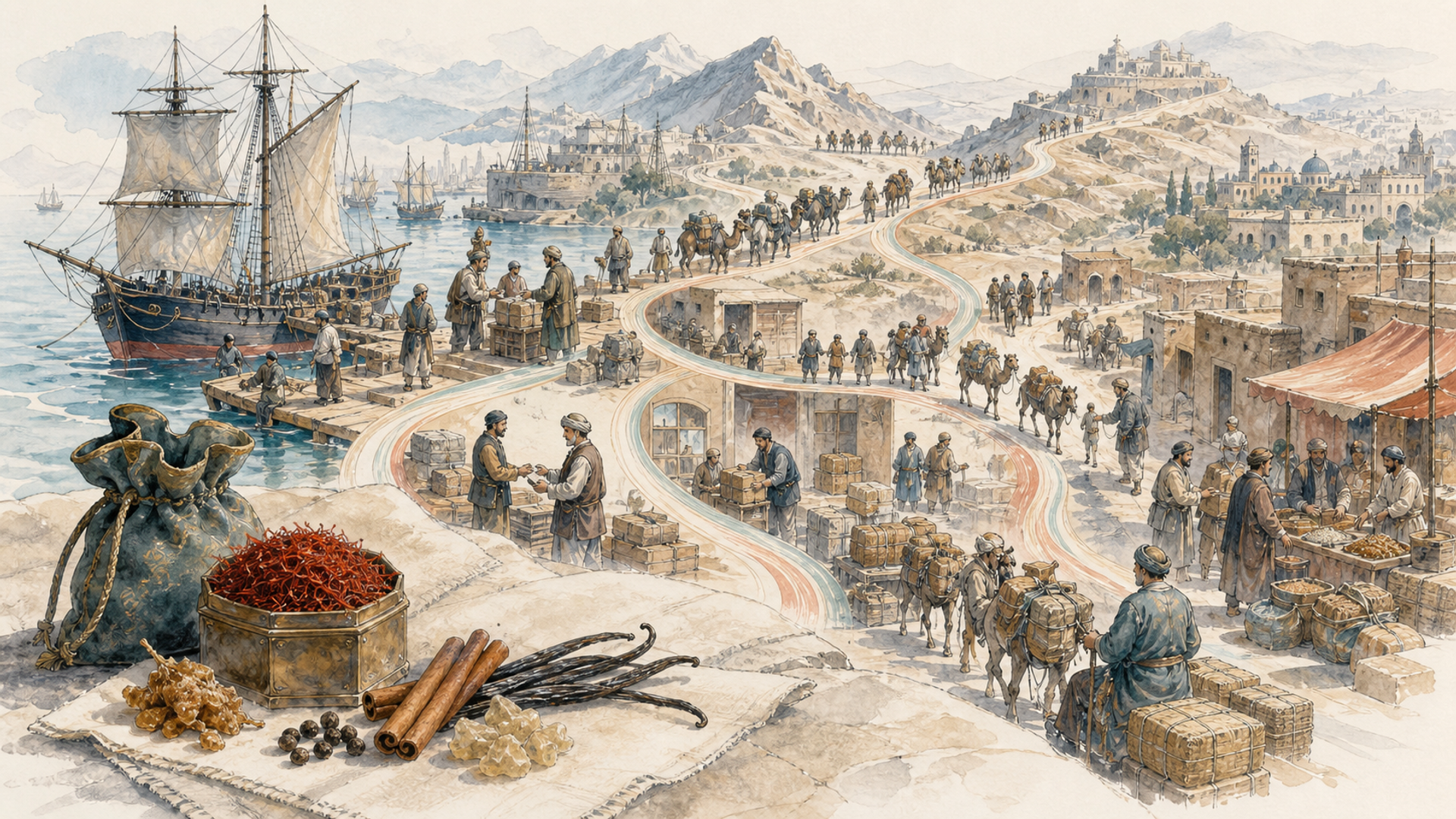 11Why Could a Spice Be Worth a Fortune?Value also depends on how rare, desirable and difficult to transport a commodity is. Spices, silk and salt show why controlling a trade route can be worth almost as much as controlling a mine.
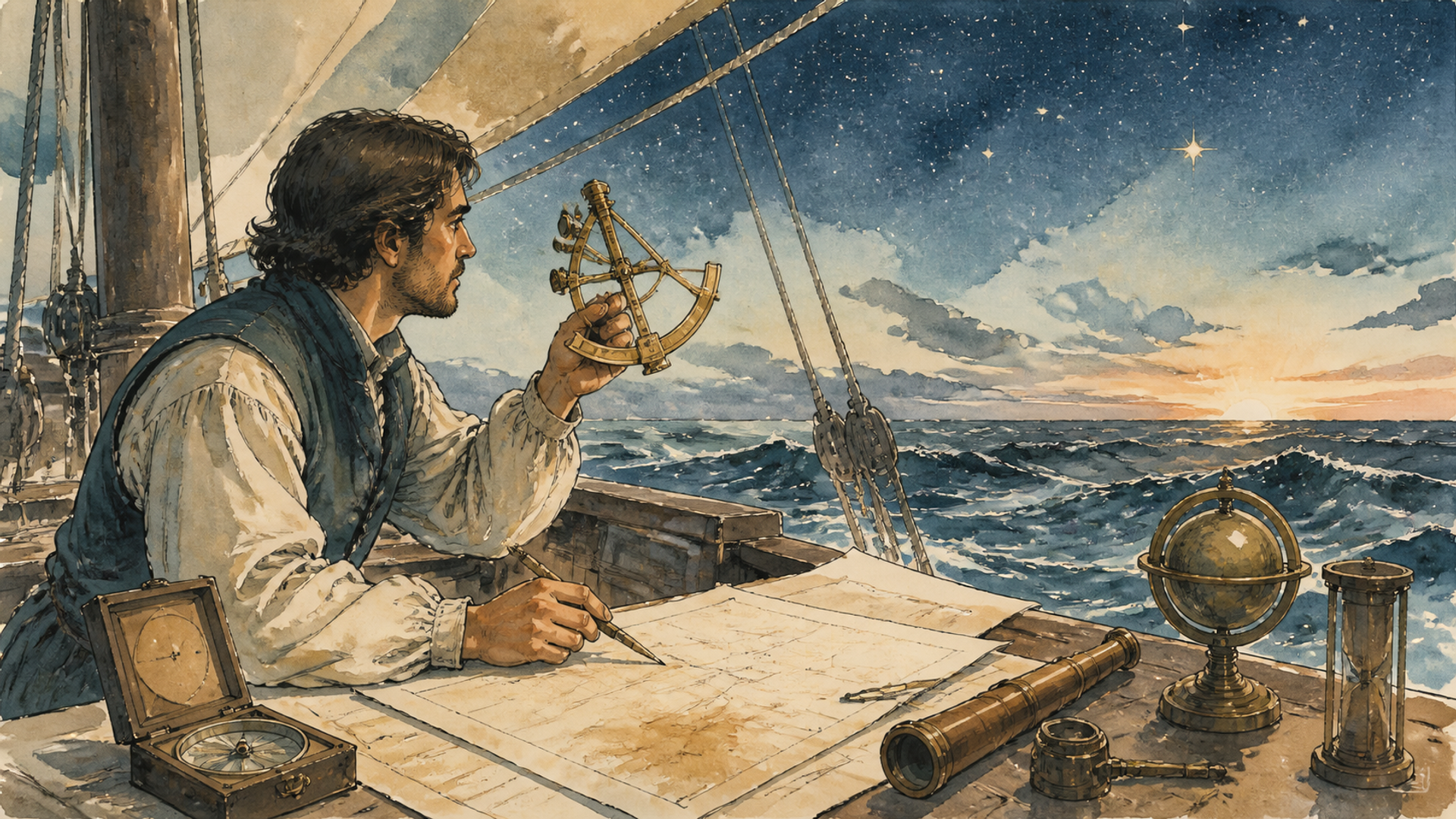 12How Do You Learn to Cross an Ocean?Oceanic exploration emerged from the accumulation of knowledge from different cultures. Navigation, mathematics, cartography and shipbuilding transformed the ocean from a barrier into an enduring link.
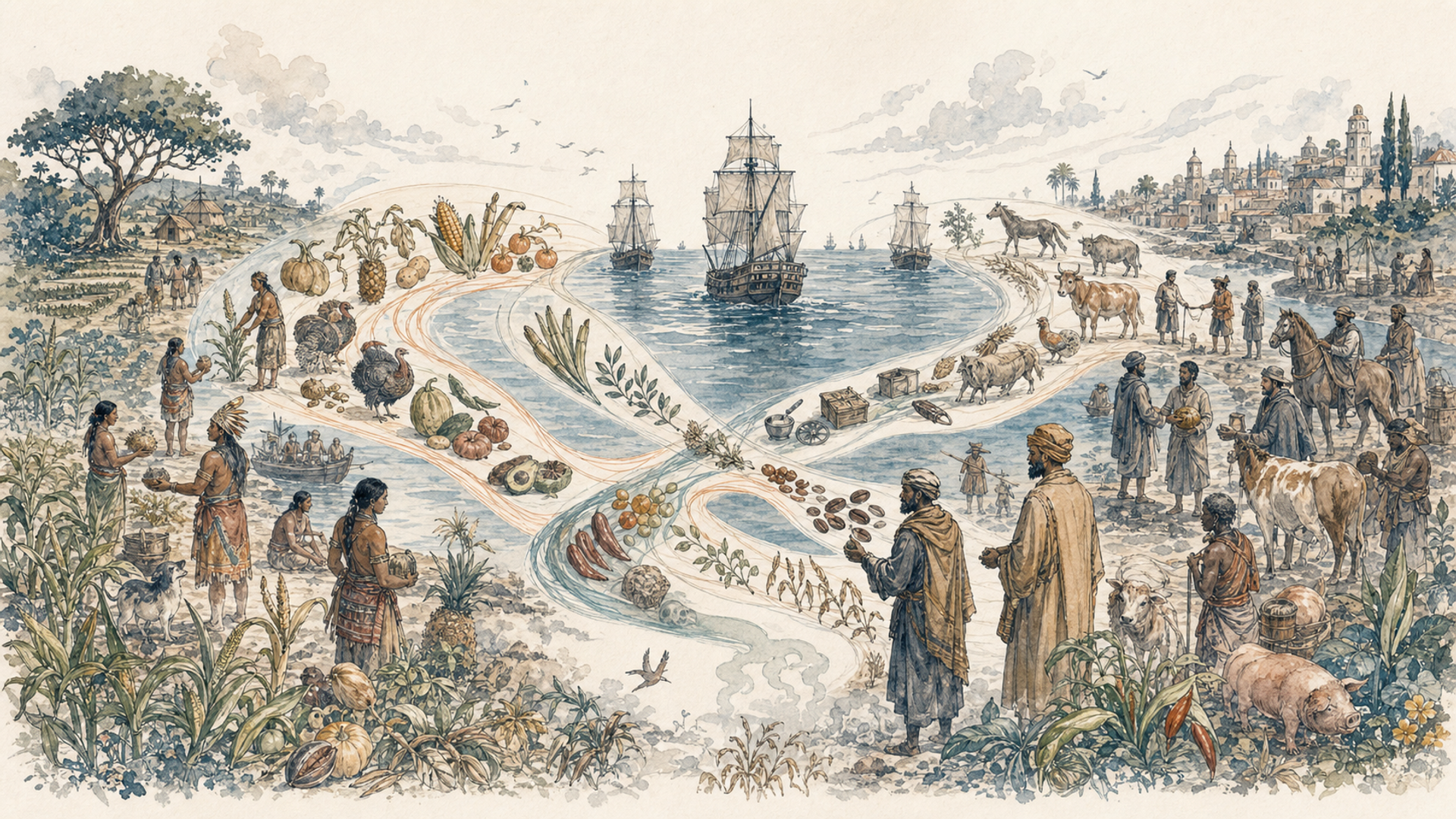 13What Happens When Two Worlds Meet?Permanent contact between the Americas and Eurasia reshuffles plants, animals, people, metals and pathogens, producing demographic and economic transformations on a planetary scale.
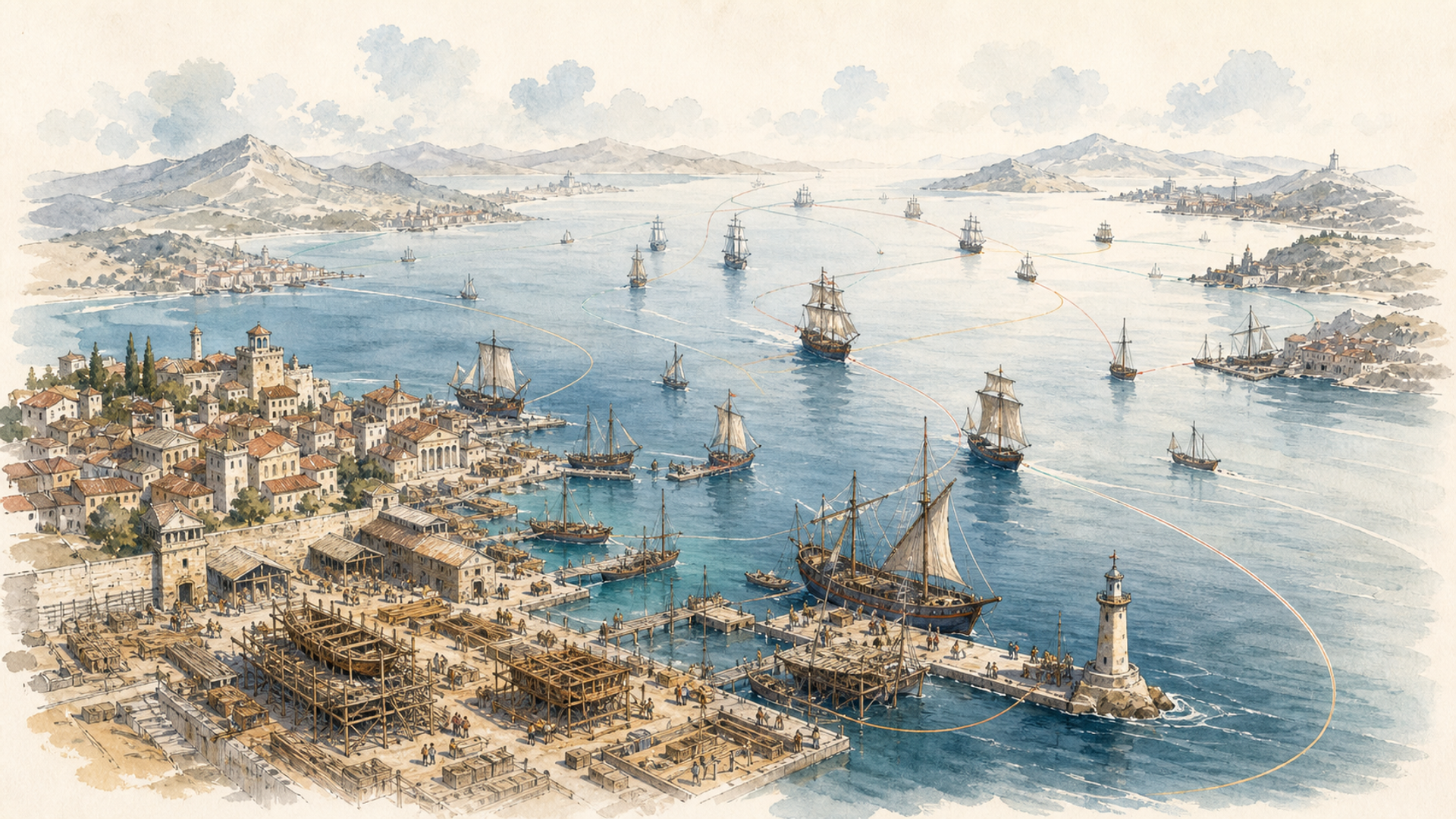 14How Can a Small Country Build an Enormous Empire?Portugal, the Netherlands and Britain show how power can spread through ports, fleets, credit, insurance and routes without directly controlling every kilometre of territory.
When Technology Changed the Rules
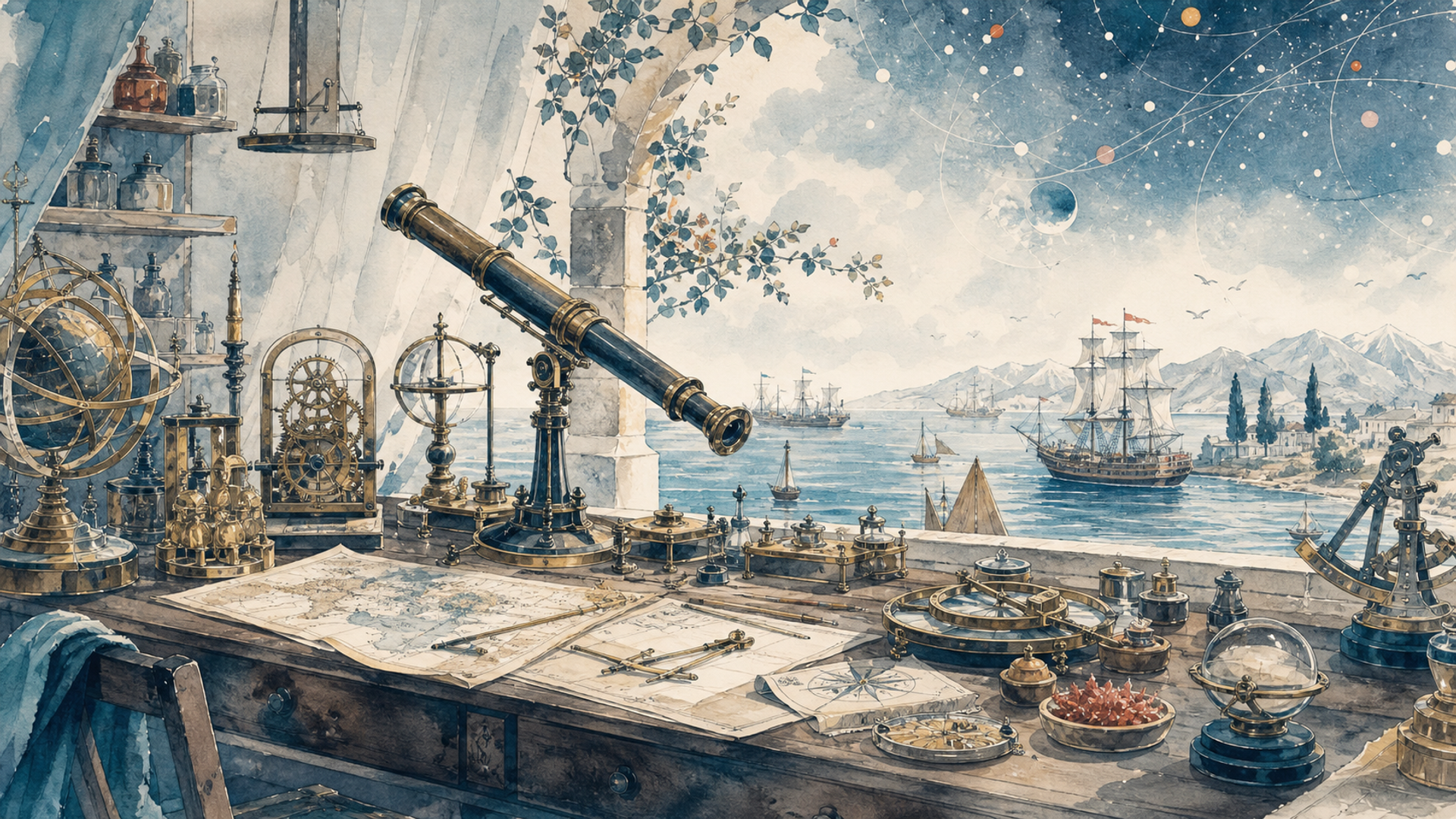 15When Knowing You Do Not Know Becomes an AdvantageThe Scientific Revolution enters our story because better measurement, prediction and testing create new capacities to navigate, build, govern and fight.
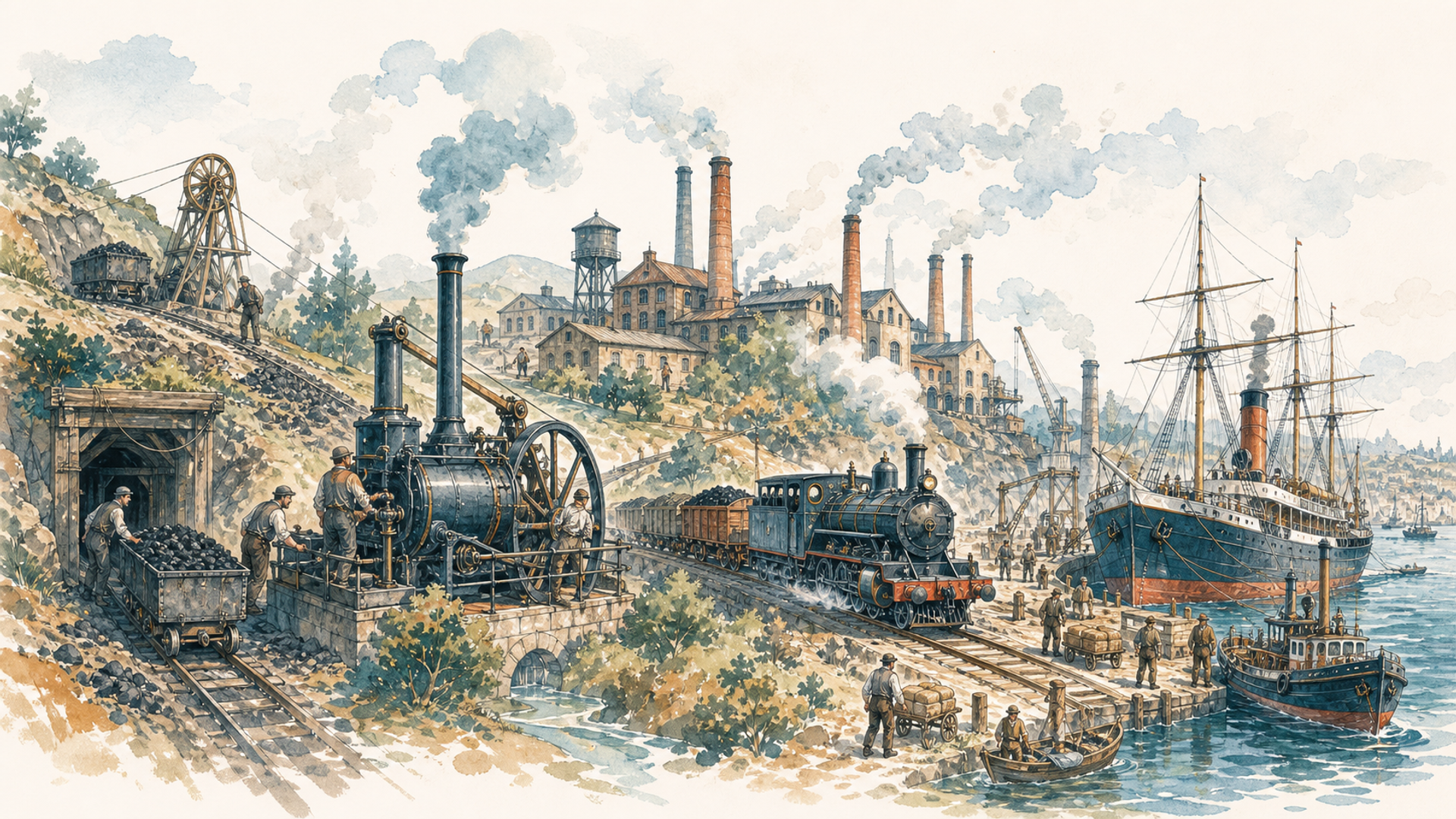 16Why Did the Industrial Revolution Begin There?Britain industrialised first through a combination, not one cause. Concentrated energy, markets, capital, institutions and innovation transformed production, war and empire.
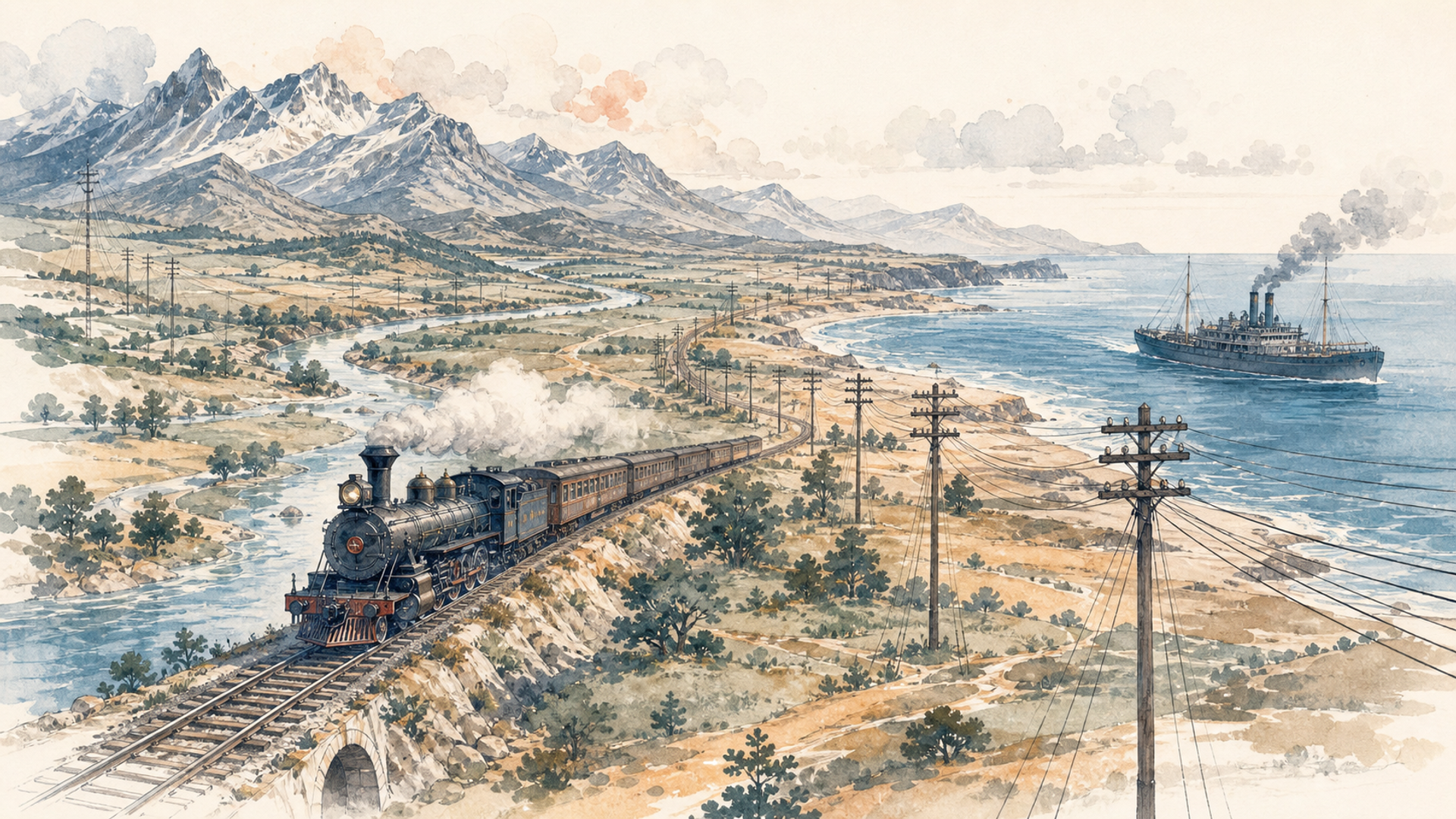 17How Do You Make a Thousand Kilometres Disappear?Distance does not disappear, but it changes scale. Railways and steamships speed up goods and armies; the telegraph makes information almost independent of the messenger's speed.
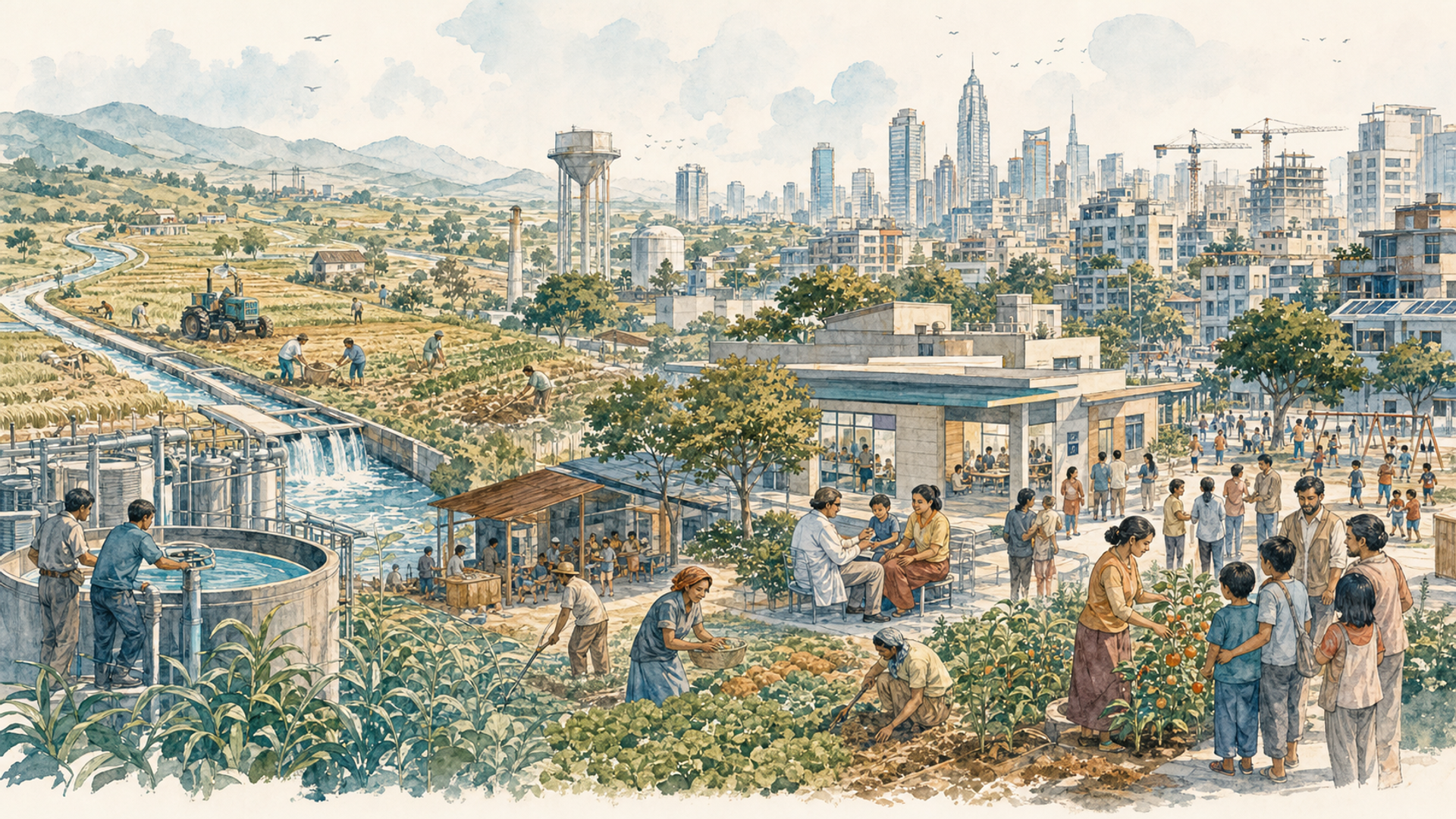 18Why Living Longer Also Changes PoliticsVaccines, germ theory, public health and synthetic fertilisers change mortality, population, agriculture and the capacity of states. Medicine enters the story only where it shifts the balance of power.
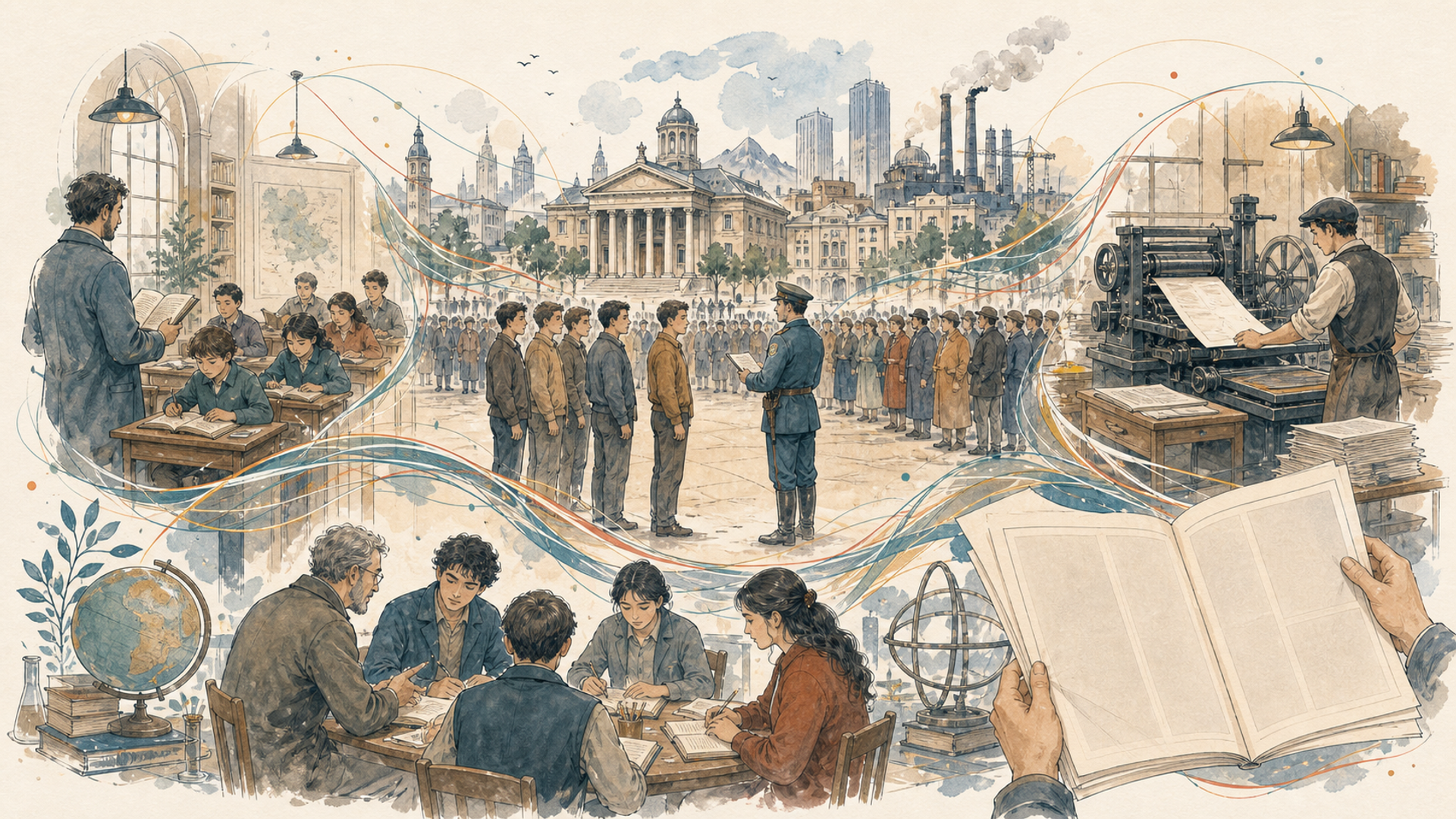 19Why Does Everyone Suddenly Want a Nation?Print, literacy, bureaucracy, school and military conscription allow millions of people to imagine themselves as part of the same ‘us’, profoundly transforming European and world politics.
Why the World Looks Like This
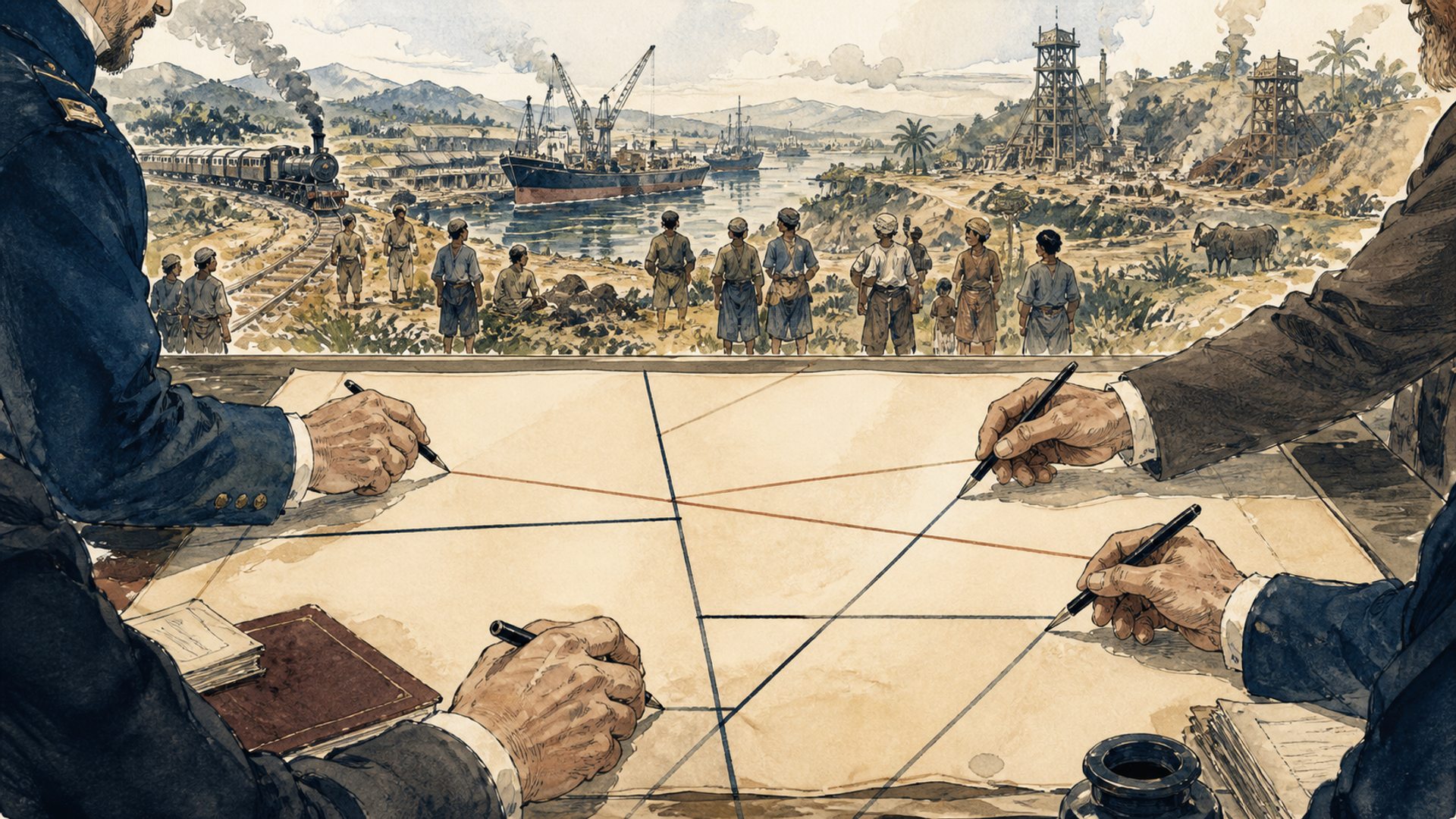 20Why Do Empires Divide Up the Planet?Industry, naval power, finance and medicine make a new wave of imperialism possible. Africa and Asia are incorporated into colonial systems that leave lasting borders and dependencies.
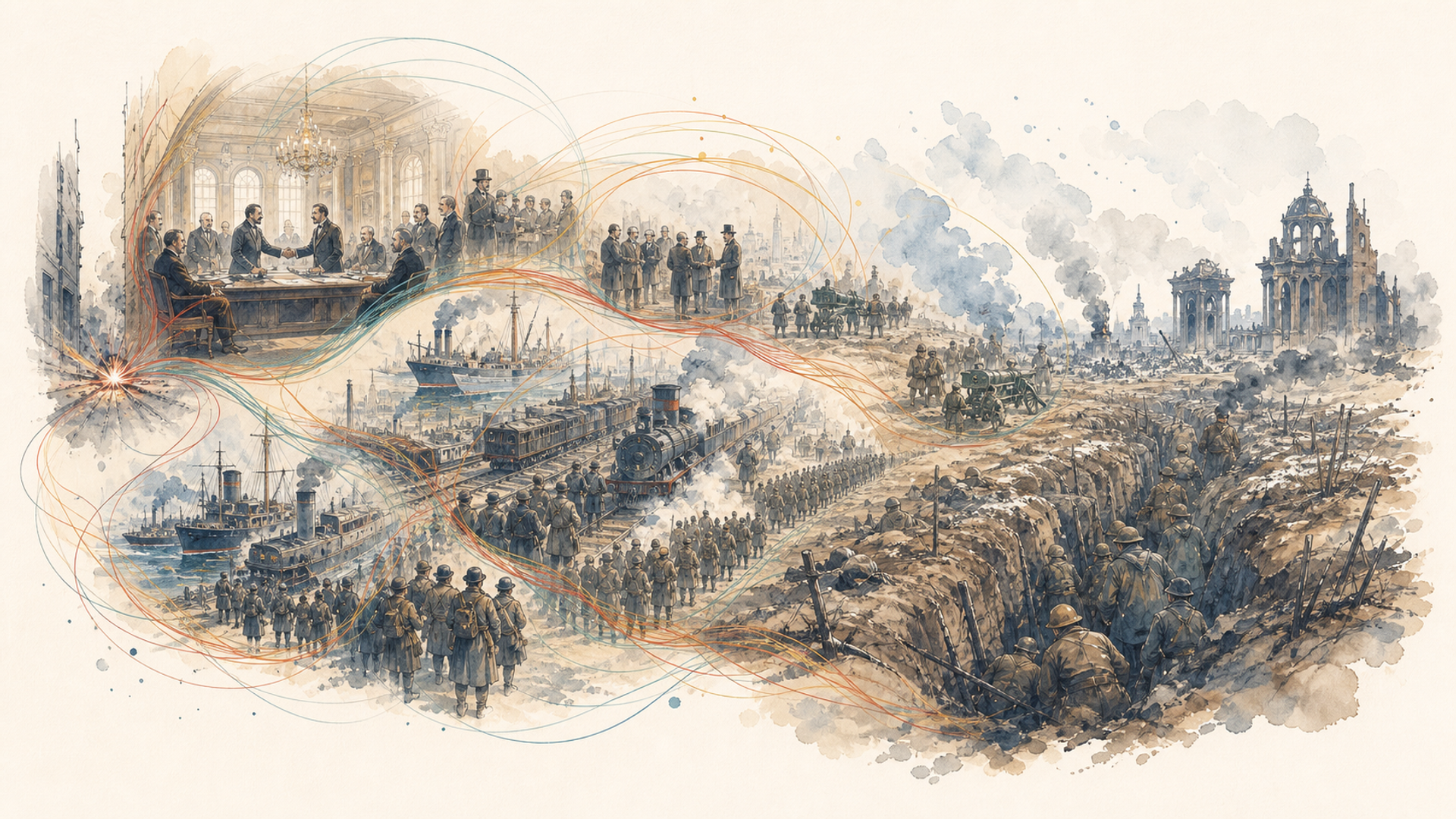 21How Can an Assassination Redraw the Planet?Sarajevo is the spark, not the explanation. Alliances, nationalism, imperial rivalries and industrial mobilisation turn a local crisis into a war that brings down four empires.
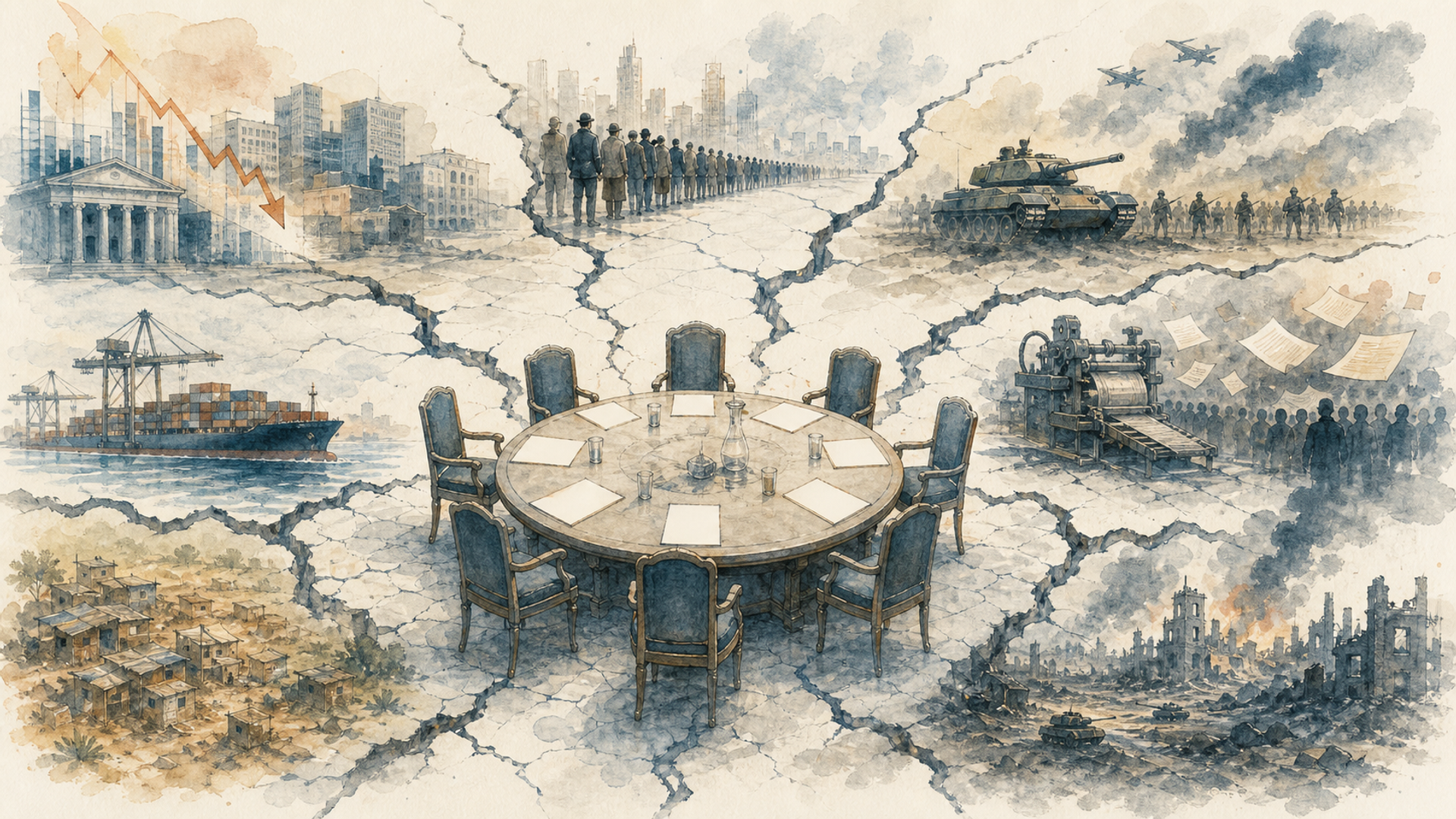 22Why Does Peace Fail?Versailles, economic crisis, fascism, Nazism and Japanese imperialism combine in another global conflict, shifting the centre of power from Europe towards the United States and the Soviet Union.
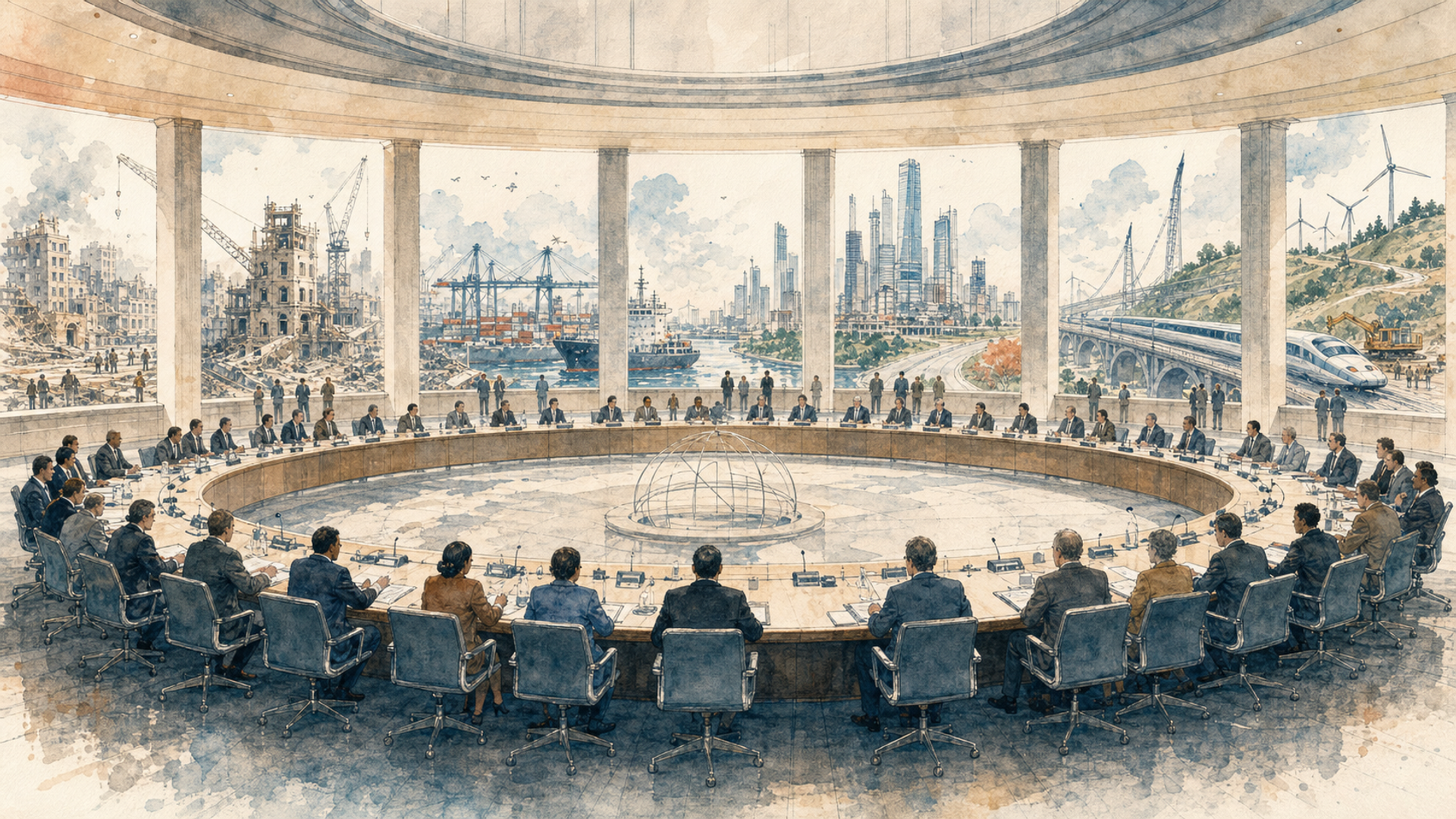 23Who Writes the Rules After a Catastrophe?After 1945, a system of institutions, alliances and rules emerges that still structures much of the world order: the UN, Bretton Woods, the dollar, the Marshall Plan and NATO.
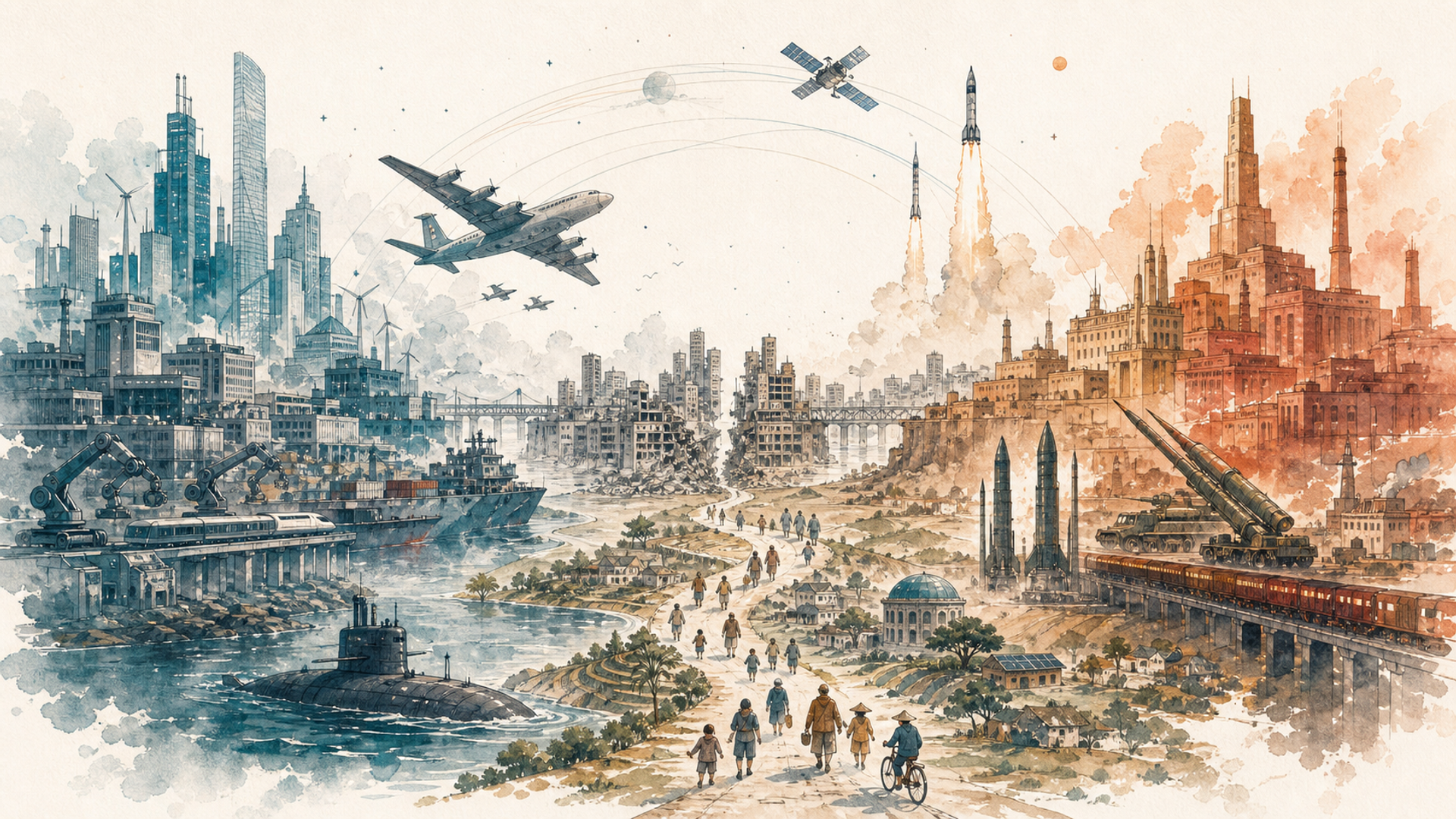 24What Happens When the World Splits in Two?Nuclear deterrence prevents an all-out war between the United States and the Soviet Union, but pushes their competition into alliances, technology, space and regional conflicts from Korea to Afghanistan.
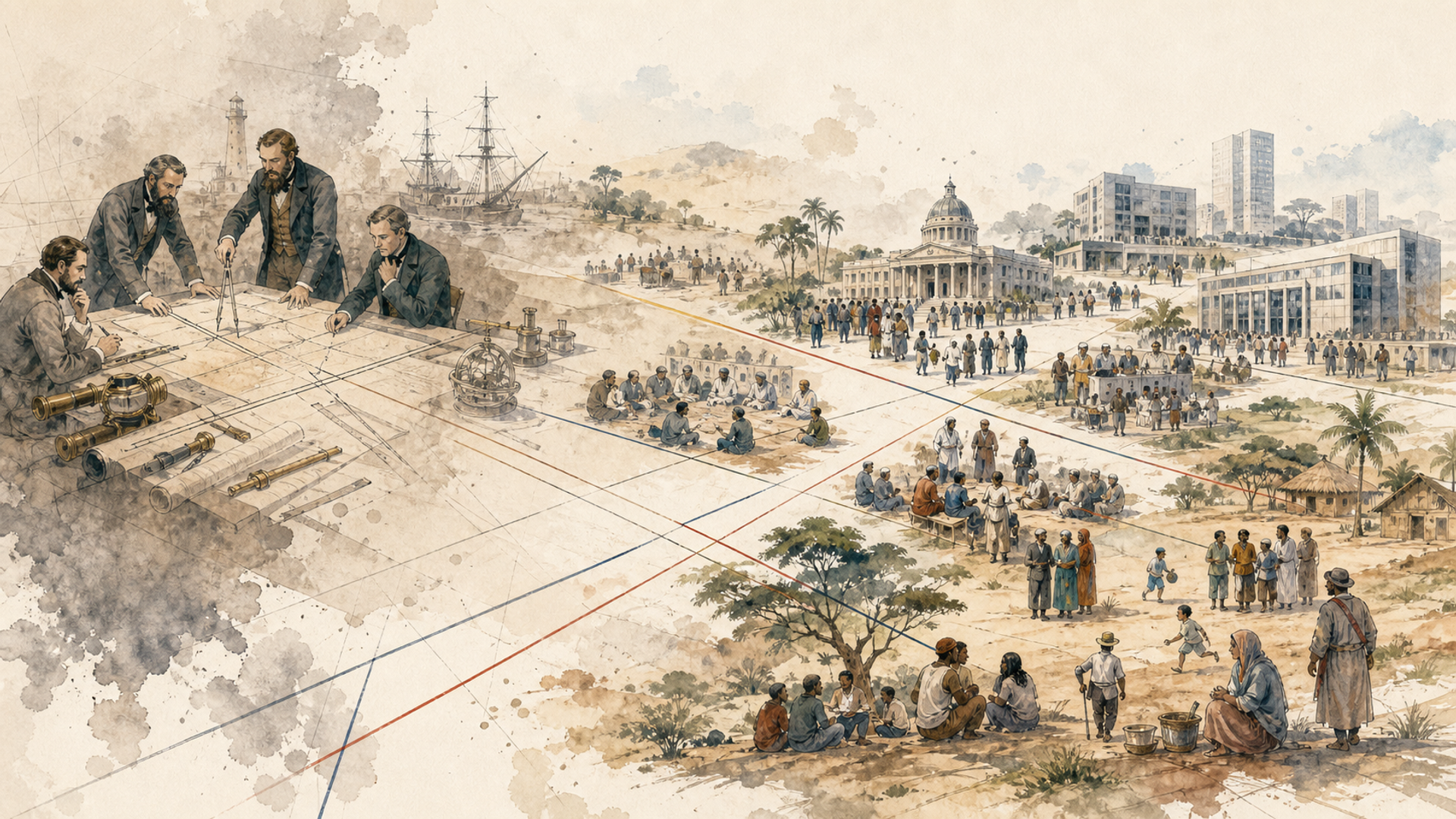 25Who Drew the Countries We Have Today?The end of the colonial empires produced much of today's map. India, Africa, the Middle East and the Non-Aligned Movement reveal how difficult it is to build new states upon inherited territories and institutions.
The Geography You Can't See
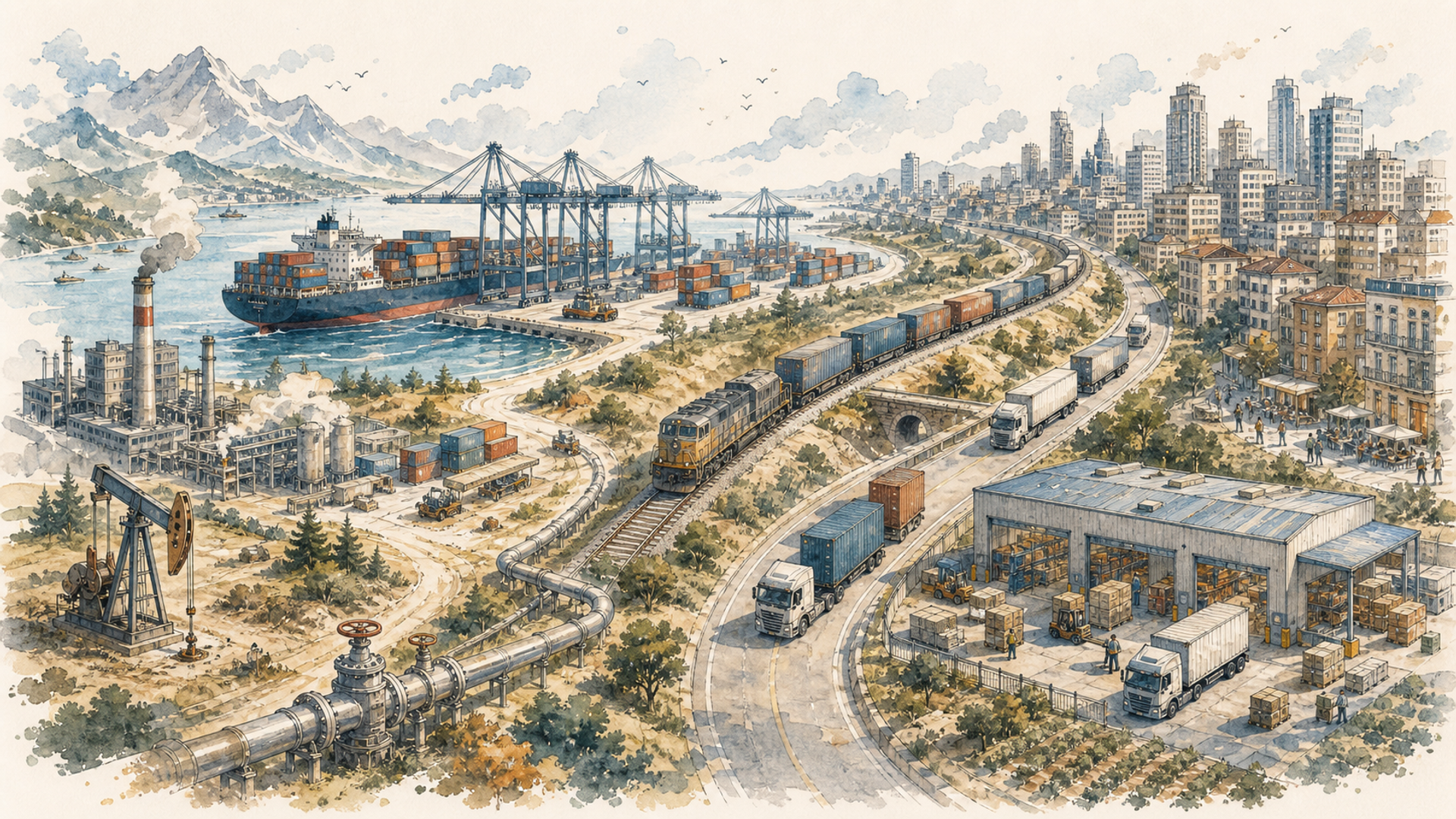 26How Did We All Become Dependent on One Another?Containerisation, oil, finance and distributed production connect distant economies in extraordinarily efficient but vulnerable networks. The chokepoints of the past are once again at the heart of geopolitics.
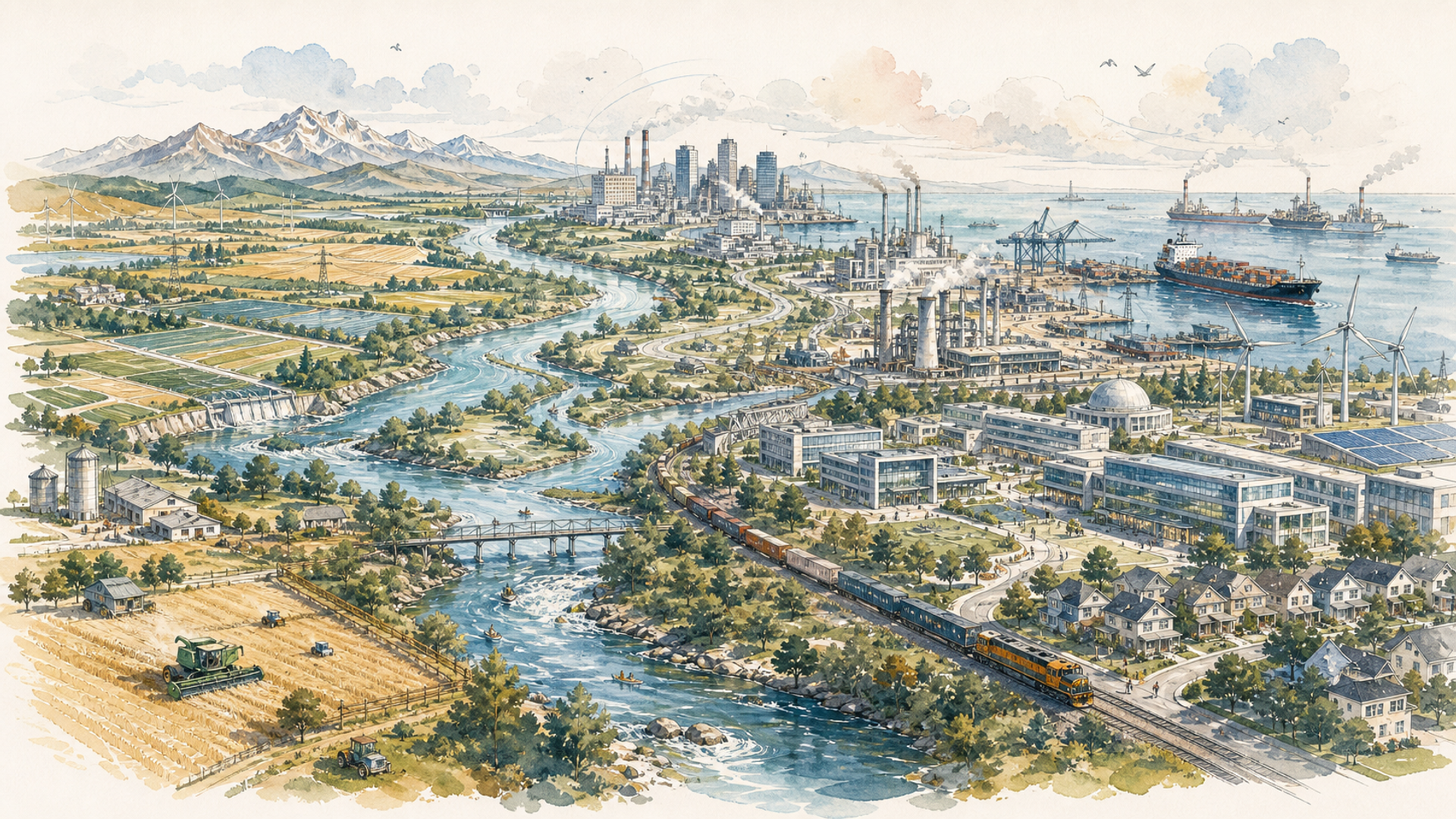 27Why Is the United States So Powerful?Oceans, rivers, farmland and a continental market offer enormous advantages, but they become global power only through industry, institutions, immigration, victories in war, the dollar, alliances and technology.
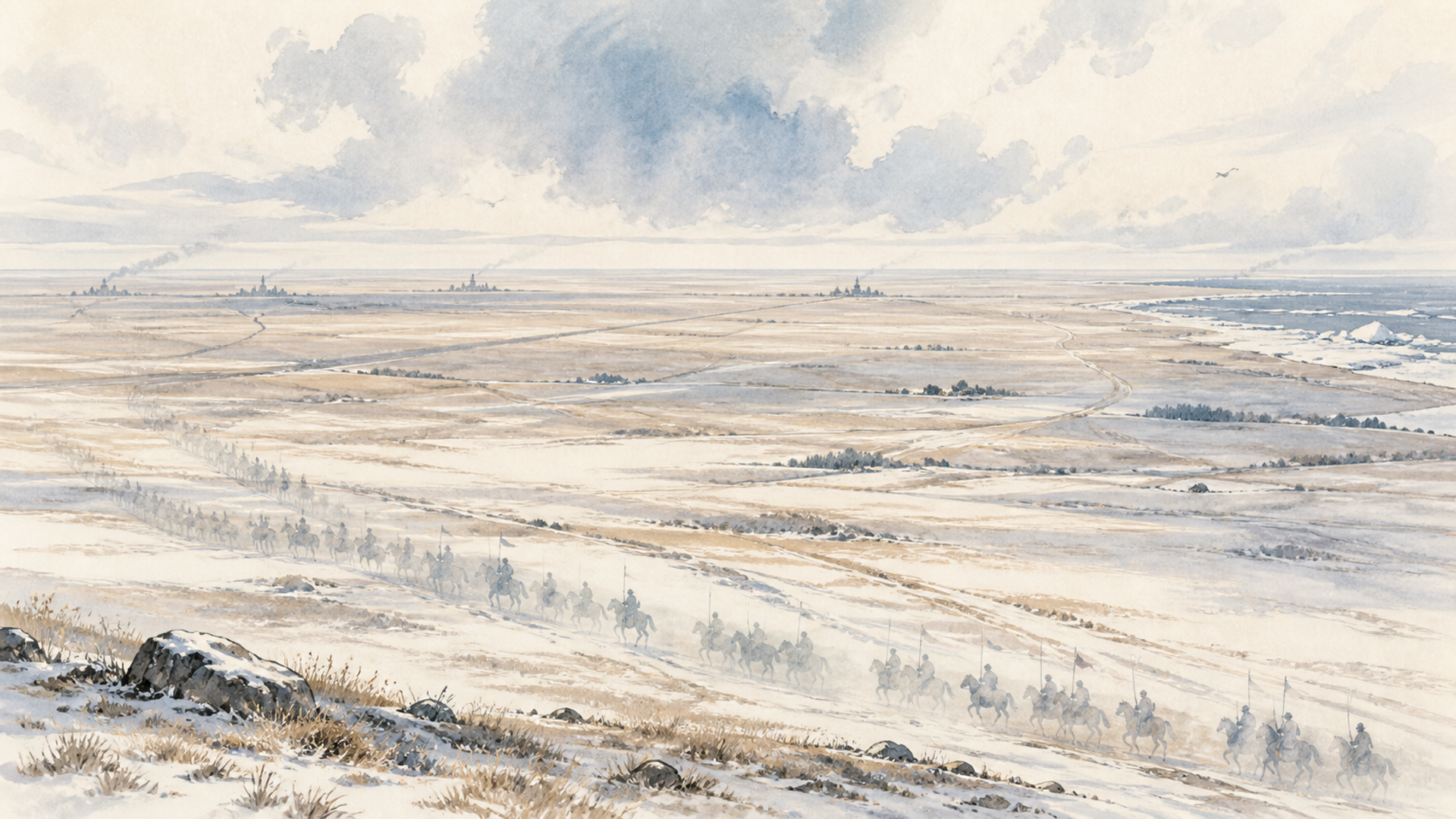 28Why Does Russia Fear Empty Space?Great plains, distance, maritime access and memories of invasion help explain Russian strategic culture—without turning geography into a justification for political choices.
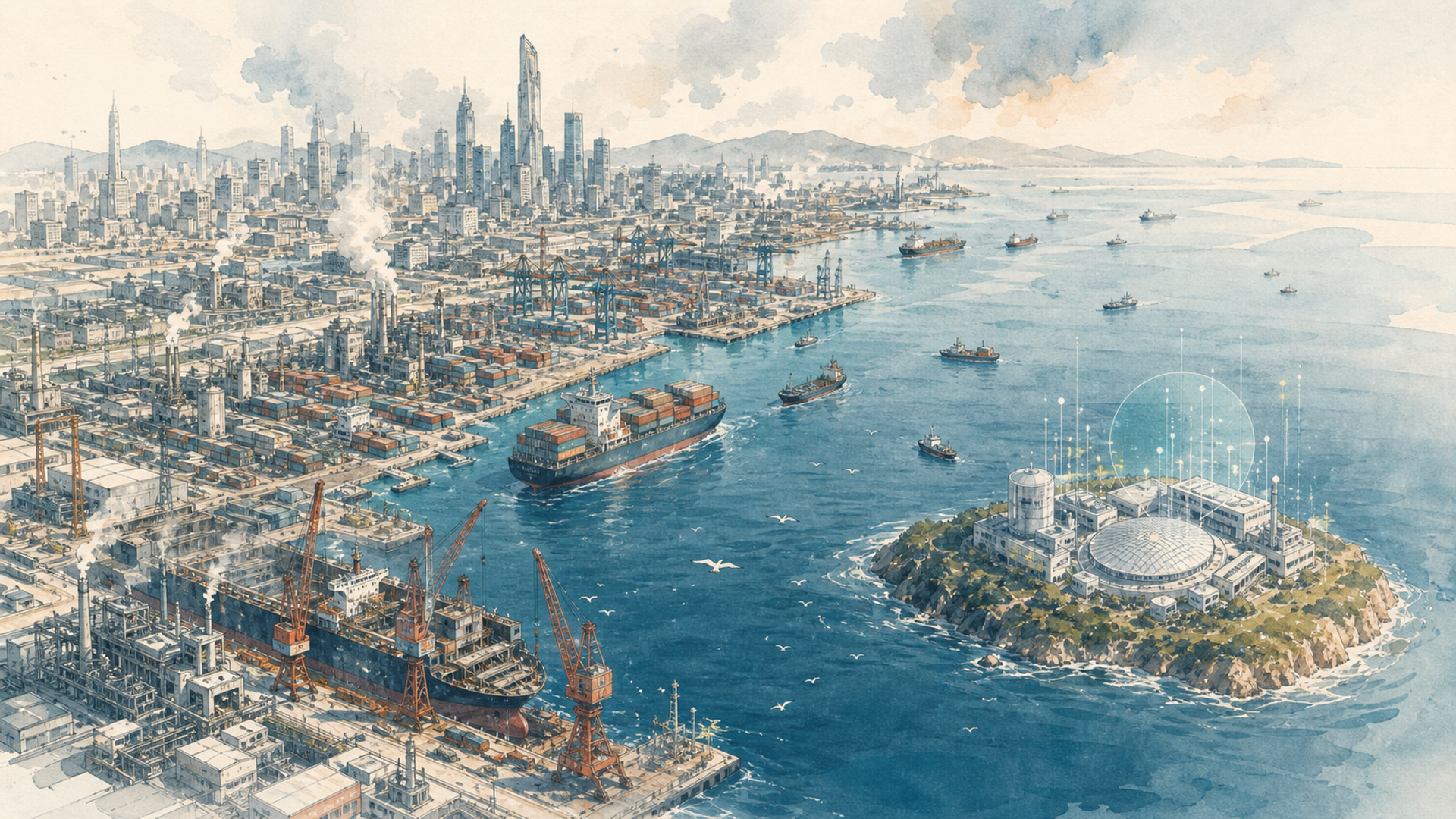 29Why Does China Want the Sea—and Why Does Taiwan Matter So Much?Industrial China depends on ports, energy and shipping lanes. Malacca, the South China Sea and Taiwan show how physical geography and technology have fused.
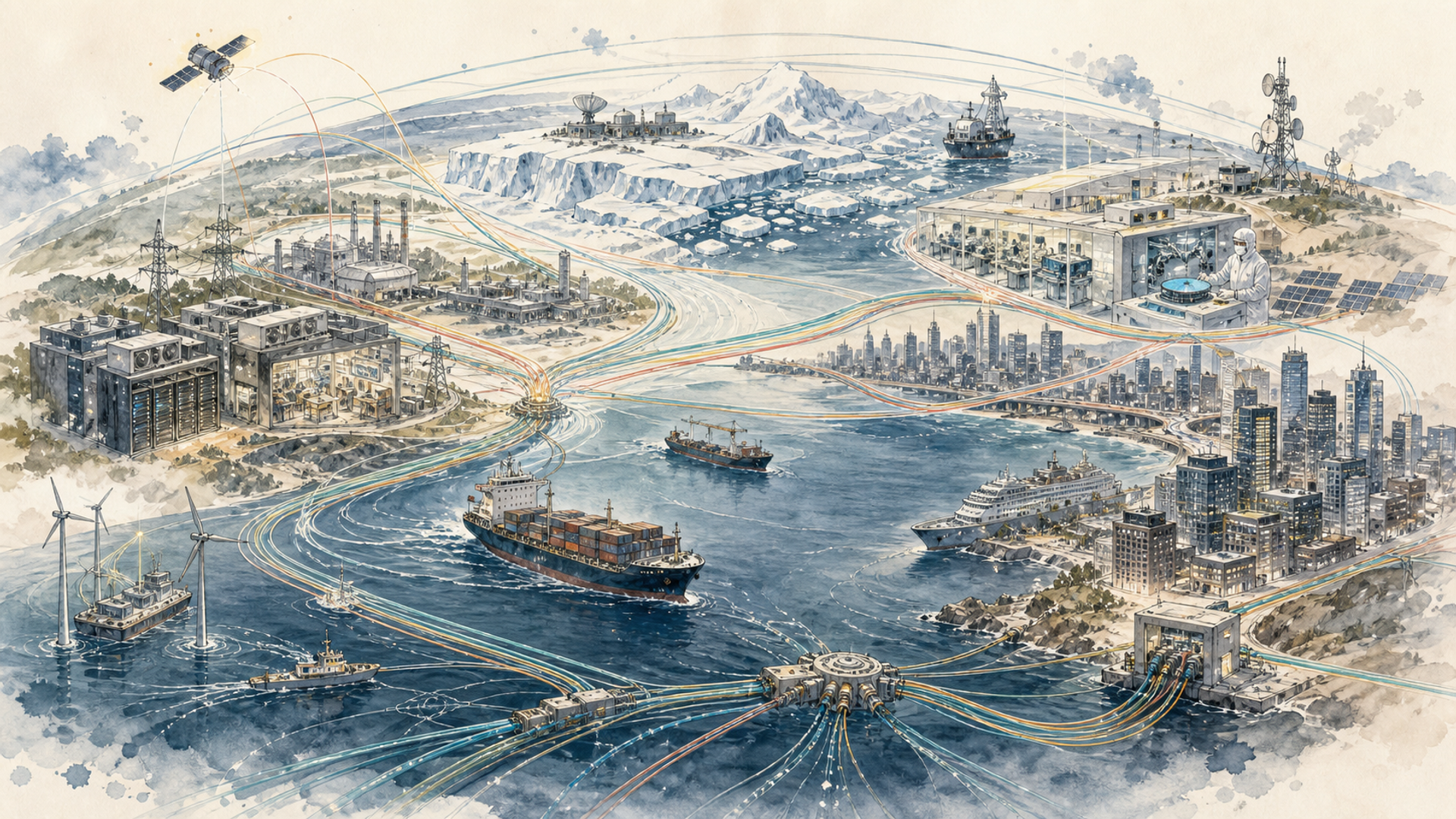 30Can Geography Lose?The internet is physical, chips have a geography, climate changes routes and resources, and space has become infrastructure. Technology continually changes what places mean, but it does not abolish territory.

A second way through
Follow the threads.
Linear reading comes first. Maps, timelines and ideas will later offer optional paths through the same connected story.
 TimelinesFollow change through time
A foundation for what comes next
The world will not become simpler.You will become better at reading it.
You do not need to remember everything. You only need to start seeing the connections.